How Real-Time Inventory Tracking Helps Businesses Prevent Stockouts and Overstocking

Introduction
Inventory management is an important part of running a successful business. Whether a company operates a retail store, a wholesale business, a manufacturing unit, or an e-commerce platform, maintaining the right stock levels is essential for smooth operations.
Many businesses still rely on spreadsheets, manual registers, or outdated inventory records to track their products. These methods can lead to inaccurate stock information, delayed reordering, excess inventory, and missed sales opportunities.
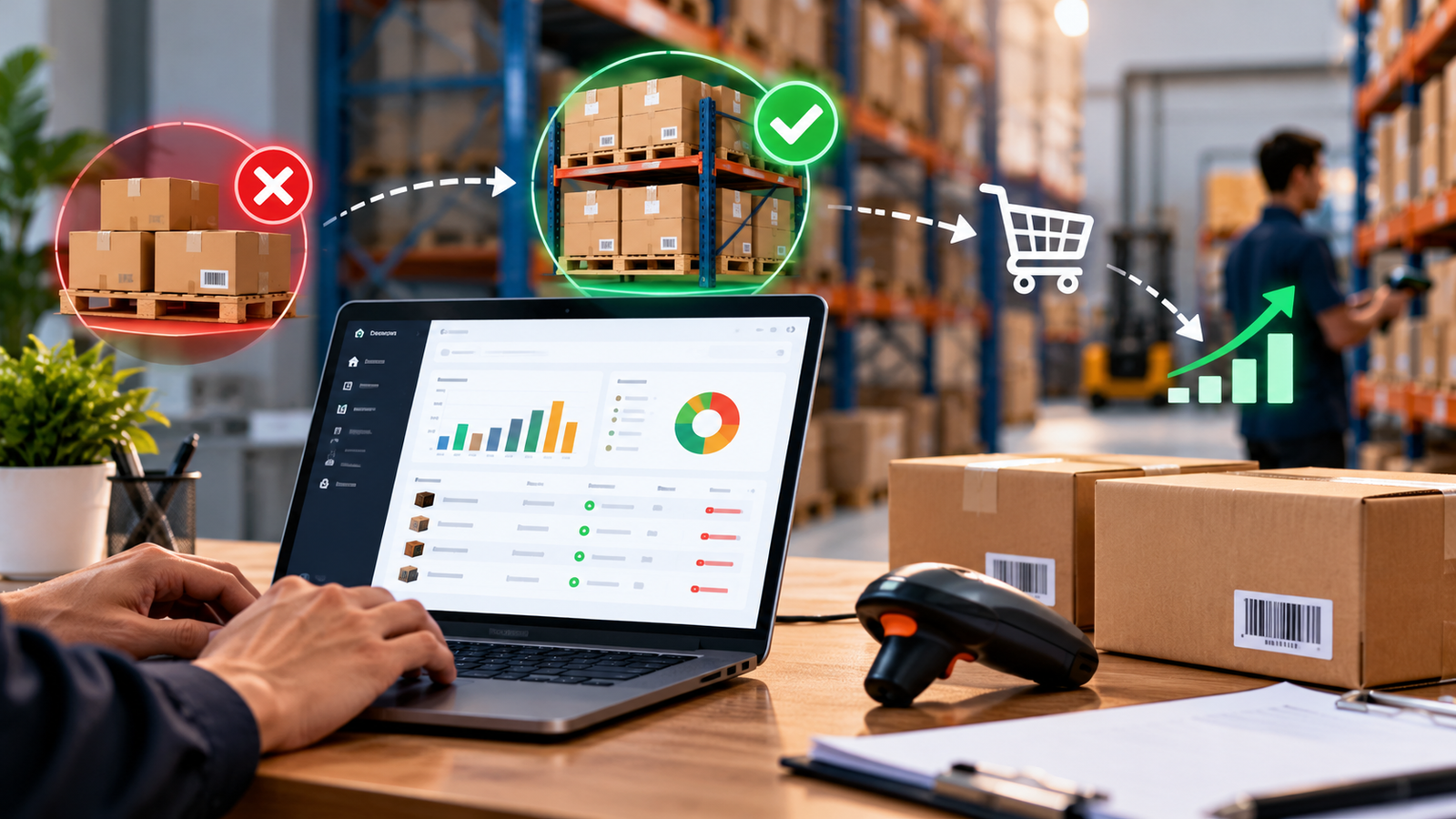
Real-time inventory tracking helps businesses overcome these challenges by providing up-to-date information about stock availability, product movement, and inventory requirements. When integrated with an Enterprise Resource Planning (ERP) system, it can help businesses make better purchasing decisions, reduce waste, and improve operational efficiency.
What Is Real-Time Inventory Tracking?
Real-time inventory tracking is a process of monitoring stock levels and product movements as transactions occur. Whenever a product is purchased, sold, received, returned, or transferred, the inventory records are updated automatically or with minimal delay.
A real-time inventory management system can help businesses monitor:
-
Current stock availability
-
Incoming and outgoing products
-
Sales and purchase transactions
-
Low-stock products
-
Fast-moving and slow-moving items
-
Warehouse stock levels
-
Product returns and adjustments
-
Reorder requirements
For example, when a retailer sells a product, the system updates the available quantity. Staff can then check the latest stock information before accepting another order or placing a purchase request.
This visibility helps businesses avoid decisions based on outdated information.
What Are Stockouts and Overstocking?
1. Understanding Stockouts
A stockout occurs when a business runs out of a product that customers want to purchase.
Stockouts can happen because of unexpected demand, inaccurate stock records, supplier delays, or poor purchasing decisions.
Common consequences include:
-
Lost sales and revenue
-
Customer dissatisfaction
-
Delayed order fulfilment
-
Reduced customer loyalty
-
Emergency purchasing at higher costs
For example, if a retailer frequently runs out of a popular product, customers may choose another supplier. Repeated stockouts can damage the business's reputation and reduce future sales opportunities.
2. Understanding Overstocking
Overstocking occurs when a business holds more inventory than it reasonably needs to meet demand.
Excess inventory can tie up working capital and increase storage expenses. Products with limited shelf lives may expire, while seasonal items can lose value if they remain unsold.
Common consequences include:
-
Higher warehouse and storage costs
-
Increased risk of product damage or expiry
-
Money tied up in unsold goods
-
Reduced space for fast-selling products
-
Greater risk of obsolete inventory
A business needs to maintain enough stock to meet demand without purchasing unnecessary quantities.
How Real-Time Inventory Tracking Prevents Stockouts
1. Provides Accurate Stock Information
Real-time tracking gives employees a clearer view of the available inventory. Instead of relying on yesterday's spreadsheet or a manual register, staff can check current stock records before confirming orders.
This reduces the risk of selling unavailable products or overlooking items that need replenishment.
2. Sends Low-Stock Alerts
Inventory systems can be configured to notify the responsible team when a product reaches its minimum stock level.
For example, if a product's reorder threshold is 20 units and the available quantity falls to that level, the system can generate an alert for review.
The purchasing team can then evaluate supplier lead times, expected demand, and existing purchase orders before placing a new order.
3. Helps Businesses Forecast Demand
Historical sales data can help businesses identify demand patterns and seasonal changes.
For example, a distributor may experience higher demand for certain products during festive seasons. By reviewing previous sales and current stock levels, the business can plan purchases before demand increases.
Forecasts are not always exact, but using reliable inventory and sales data can improve purchasing decisions.
4. Improves Supplier and Purchase Planning
Real-time inventory information helps purchasing teams understand which products need replenishment and which orders are already in progress.
This makes it easier to coordinate with suppliers, account for delivery times, and reduce the likelihood of running out of essential products.
When connected to purchasing and supplier management modules, an ERP system can provide a more complete view of the procurement process.
How Real-Time Inventory Tracking Reduces Overstocking
1. Identifies Slow-Moving Products
Not every product sells at the same rate. Some items move quickly, while others remain in storage for long periods.
Inventory reports can help businesses identify slow-moving products and adjust future purchasing decisions.
Instead of repeatedly ordering items that already exist in excess quantities, managers can focus on products with stronger demand.
2. Supports Better Purchasing Decisions
Without accurate stock information, employees may order products that are already available in sufficient quantities.
A centralized inventory system helps purchasing teams review available stock, pending purchase orders, and sales trends before approving new purchases.
This can reduce duplicate orders and unnecessary stock accumulation.
3. Improves Inventory Turnover
Inventory turnover measures how frequently a business sells and replaces its inventory during a specific period.
Monitoring turnover helps managers understand whether products are moving efficiently or remaining in storage for too long.
Businesses can use these insights to revise reorder quantities, review pricing strategies, and reduce investment in slow-moving inventory.
4. Reduces Expiry and Obsolescence Risks
Businesses dealing with food, medicines, cosmetics, electronics, or seasonal products need to monitor expiry dates and product life cycles carefully.
Where supported, inventory software can track batch numbers, expiry dates, and product ageing. Alerts and stock reports help staff prioritize products that need attention.
For suitable businesses, practices such as First Expiry, First Out (FEFO) can help reduce losses from expired goods.
Why Integrate Inventory Tracking with an ERP System?
A standalone inventory tool can be useful, but an ERP system can connect inventory with other important business functions.
Centralized Business Information
An ERP system can connect inventory data with sales, purchasing, accounting, warehouse operations, and reporting. Authorized employees can work from a common source of information rather than maintaining separate records across departments.
Improved Financial Control
Inventory represents money invested in products. By connecting stock movements with purchasing and accounting processes, businesses can improve visibility into inventory costs and stock valuation.
Accurate financial treatment still depends on proper configuration and accounting practices.
Faster Order Processing
When sales teams can view available inventory, they can make more informed decisions about order acceptance and fulfilment.
Warehouse employees can also use current information to prepare, pack, and dispatch products more efficiently.
Better Management Reports
Managers can review inventory reports to identify stock shortages, excess quantities, fast-moving products, slow-moving items, and purchasing trends.
These reports support more informed operational decisions.
Key Features to Look for in Inventory Management Software
Before choosing an inventory tracking solution, businesses should evaluate the features that match their operations.
Important features may include:
-
Real-time stock updates: Keep inventory records current as transactions are processed.
-
Low-stock alerts: Notify teams when products approach defined reorder levels.
-
Barcode scanning: Help employees record product movements quickly and accurately.
-
Multi-warehouse management: Track inventory across different storage locations.
-
Purchase order management: Monitor supplier orders and incoming stock.
-
Batch and expiry tracking: Support businesses that manage perishable or regulated products.
-
Sales integration: Connect product sales with stock updates.
-
Inventory reports: Identify excess stock, shortages, and product movement trends.
-
Role-based permissions: Restrict inventory adjustments to authorized employees.
-
ERP integration: Connect stock information with finance, purchasing, sales, and other business processes.
The right feature set depends on the size, industry, and complexity of the business.
Best Practices for Effective Inventory Management
Technology delivers better results when supported by consistent business processes.
Businesses should follow these practices:
-
Set reorder levels: Define suitable minimum stock levels based on demand, lead time, and business requirements.
-
Review demand regularly: Use sales history and seasonal patterns to guide purchasing decisions.
-
Conduct stock audits: Compare physical inventory with system records and investigate discrepancies.
-
Monitor supplier performance: Track delivery times and recurring supply problems.
-
Classify products: Identify high-value, fast-moving, slow-moving, and expiry-sensitive items.
-
Train employees: Ensure staff record receipts, sales, returns, and adjustments correctly.
-
Review inventory reports: Use stock ageing, turnover, and shortage reports to improve decisions.
-
Maintain data accuracy: Keep product codes, units of measurement, and supplier details consistent.
These practices help businesses get more value from inventory tracking software.
Conclusion
Stockouts and overstocking can affect sales, customer satisfaction, cash flow, and daily business operations. Without accurate stock information, businesses may struggle to determine when to reorder products or how much inventory they actually need.
Real-time inventory tracking provides better visibility into stock movements, supports timely replenishment, highlights slow-moving products, and improves purchasing decisions. When connected with an ERP system, it can also link inventory with sales, procurement, accounting, and management reporting.
For businesses looking to improve stock control, the first step is to evaluate their existing inventory process, identify recurring problems, and choose a software solution that fits their operational needs.
Looking to improve your inventory management?
Logic Waves Tech helps businesses explore software solutions designed to streamline operations and improve business visibility. Contact Logic Waves Tech to discuss your inventory management requirements and find a solution suited to your business.
Want this for your business?
Talk to our team — free consultation, clear advice.