Table of Contents
- Why Students Should Learn Graphic Designing for a Creative Career
- Introduction
- What Is Graphic Designing?
- Why Should Students Learn Graphic Designing?
- Develops Creativity
- Builds Practical Skills
- Suitable for All Backgrounds
- Creates Career Opportunities
- Helps Build a Portfolio
- What Can Students Learn?
- Why Practical Training Is Important
- Freelancing Opportunities
- Final Thoughts
Why Students Should Learn Graphic Designing for a Creative Career
Introduction
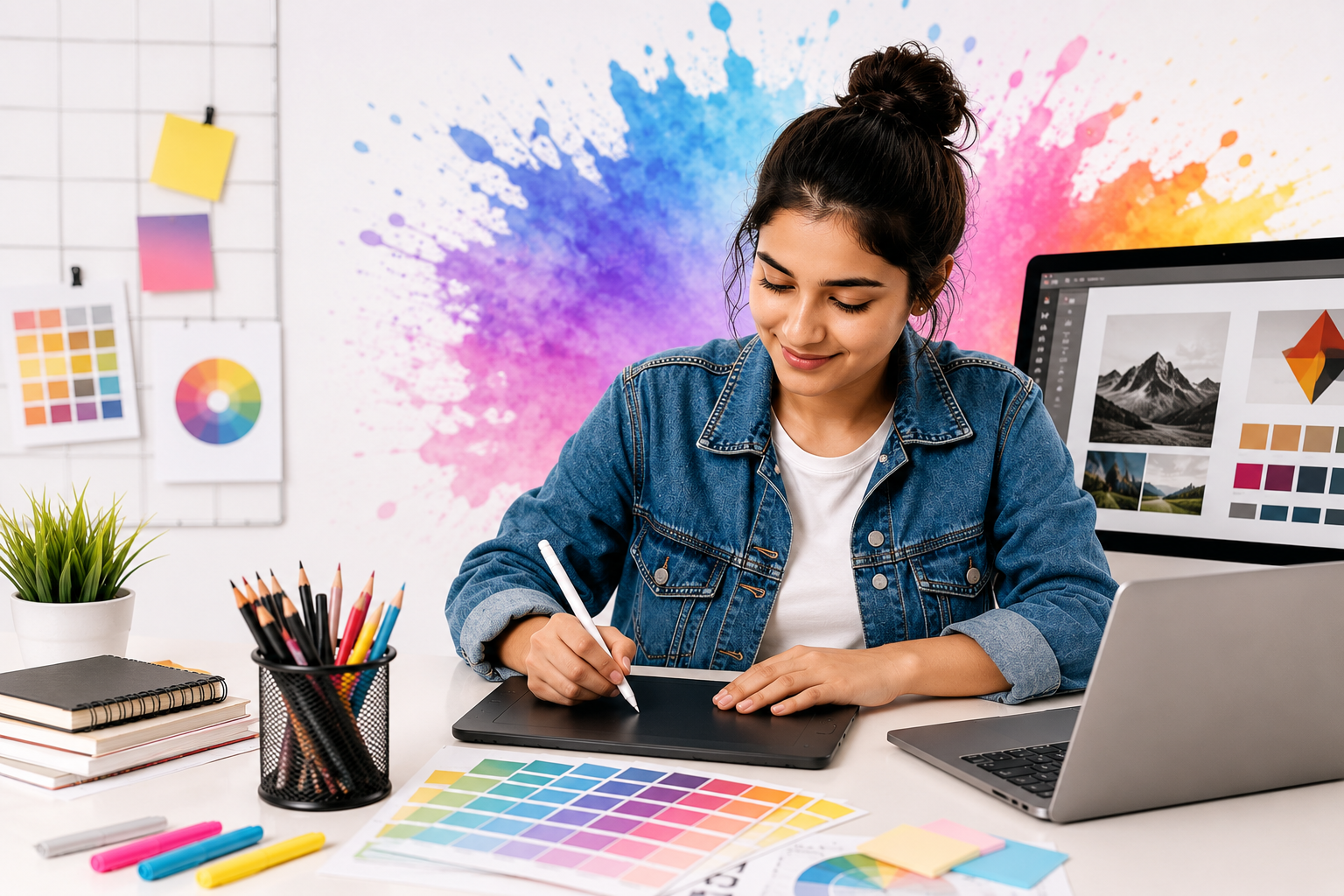
Graphic designing is a valuable skill for students who are interested in creativity, technology and visual communication. Businesses need attractive designs for social media, websites, advertisements, brochures, product packaging and branding.
Students from commerce, arts, science or computer backgrounds can learn graphic design. With practical training and regular practice, they can build a portfolio and explore jobs, internships, freelancing and business opportunities.
What Is Graphic Designing?
Graphic designing is the process of communicating ideas through colours, images, fonts, icons and layouts.
Graphic designers create:
-
Logos and brand identities
-
Social media posts
-
Website banners
-
Posters and flyers
-
Business cards
-
Product advertisements
-
Brochures and catalogues
-
YouTube thumbnails
-
Product packaging
A good design should not only look attractive but also communicate the message clearly.
Why Should Students Learn Graphic Designing?
Develops Creativity
Graphic designing helps students turn ideas into visual content. They learn how to combine colours, images, fonts and layouts professionally.
Builds Practical Skills
Graphic design is useful in digital marketing, advertising, e-commerce, education, technology, media and many other industries.
Suitable for All Backgrounds
Students do not need a technical degree to start learning. Beginners can begin with simple tools and gradually develop professional skills.
Creates Career Opportunities
After learning graphic design, students can explore roles such as:
-
Graphic Designer
-
Social Media Designer
-
Brand Designer
-
Photo Editor
-
Marketing Creative Designer
-
Design Intern
-
Freelance Graphic Designer
Helps Build a Portfolio
Students can create sample projects such as logos, posters, social media posts, brochures and banners. These projects can be added to a portfolio for job, internship or freelance applications.
What Can Students Learn?
A graphic designing course may include:
-
Canva designing
-
Adobe Photoshop
-
Background removal
-
Photo editing
-
Social media creatives
-
Logo and branding design
-
Poster and banner design
-
Business card design
-
Brochure and catalogue design
-
Print and digital file formats
Students also learn important design principles such as colour theory, typography, alignment, spacing, visual hierarchy and brand consistency.
Why Practical Training Is Important
Graphic designing cannot be learned only through theory. Students need to work on real or practice-based projects.
Practical training helps them:
-
Understand client requirements
-
Work with correct design dimensions
-
Follow brand guidelines
-
Improve software skills
-
Accept feedback and make revisions
-
Complete projects on time
-
Build a professional portfolio
Freelancing Opportunities
Students with good design skills can also work independently. They may provide services such as logo designing, social media post creation, YouTube thumbnails, posters, website banners and product catalogue design.
Students should first focus on improving their skills and portfolio before expecting immediate income.
Final Thoughts
Graphic designing is a useful career skill for students who want to combine creativity with technology. It offers opportunities in marketing, branding, advertising, social media, e-commerce and web development.
With proper training, practical projects and regular practice, students can develop professional design skills and prepare themselves for internships, jobs, freelancing or future business opportunities.