Table of Contents
- How Purchase Management and Supplier Tracking Improve Business Control
- 1. What Is Purchase Management?
- 2. Why Supplier Tracking Matters
- 3. Better Control Over Purchase Orders
- 4. Reducing Duplicate and Unnecessary Purchases
- 5. Monitoring Purchase Prices
- 6. Managing Supplier Payments
- 7. Tracking Supplier Performance
- 8. Improving Inventory Availability
- 9. Preventing Purchase Errors
- 10. Managing Purchase Returns
- 11. Understanding Supplier-Wise Spending
- 12. Supporting Better Stock Planning
- 13. Maintaining a Complete Purchase History
- 14. Better Business Reporting
- 15. Connecting Purchasing With Billing and Inventory
- 16. Improving Accountability
- 17. When Should a Business Use Purchase Management Software?
- Conclusion
How Purchase Management and Supplier Tracking Improve Business Control
Purchasing is one of the most important activities in any growing business. Whether a company operates a retail store, supermarket, restaurant, manufacturing unit, or wholesale business, maintaining a steady supply of products and materials is essential for daily operations.
When purchases and supplier information are managed manually, businesses can struggle with delayed orders, incorrect quantities, missed payments, inconsistent pricing, and limited visibility into supplier performance.
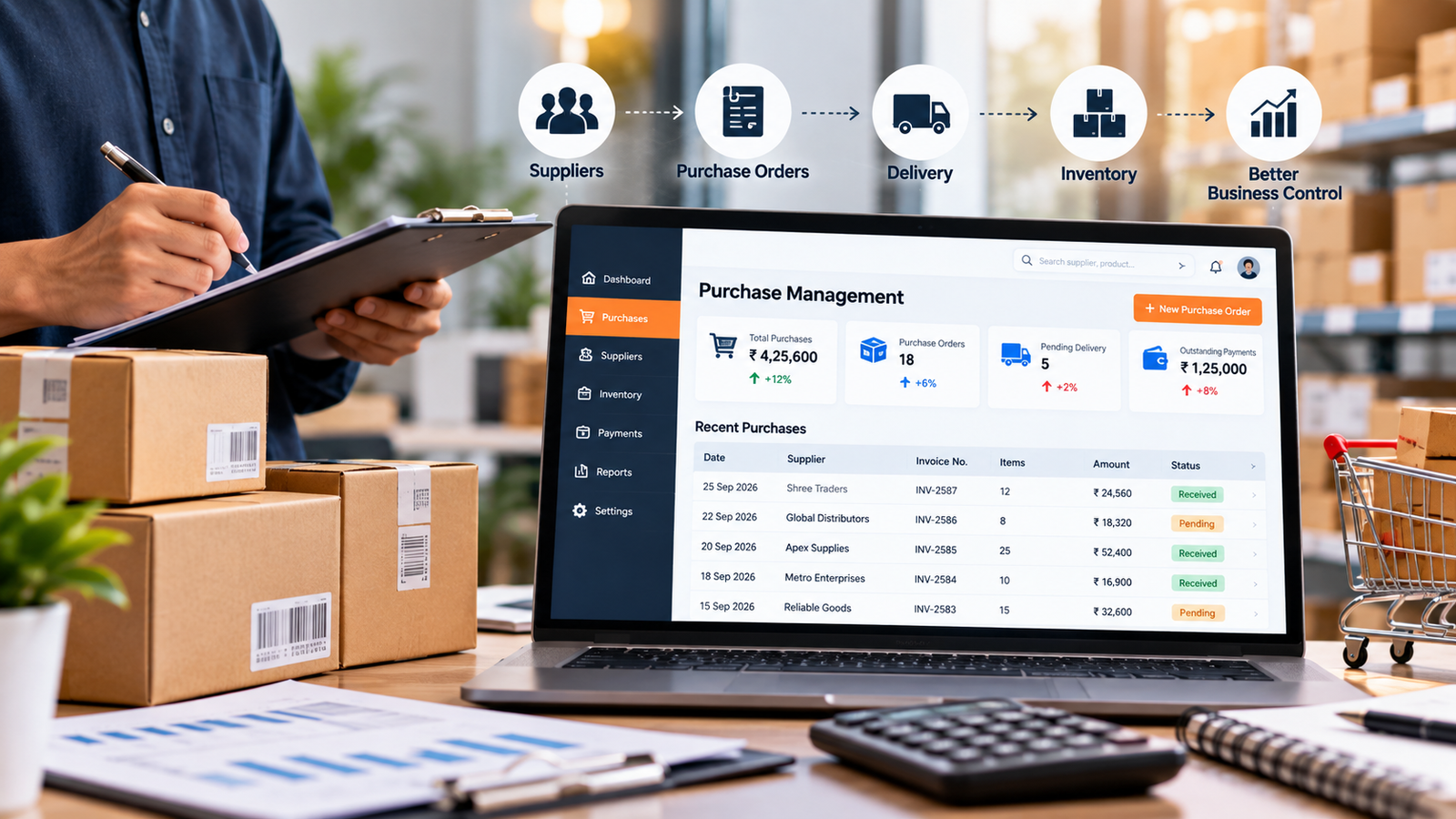
A structured purchase management and supplier tracking system can help businesses organize purchasing activities, maintain supplier information, control costs, and make better purchasing decisions.
1. What Is Purchase Management?
Purchase management involves planning, recording, and monitoring the process of buying products or materials from suppliers.
It can include:
-
Creating purchase orders
-
Managing suppliers
-
Recording purchases
-
Tracking received quantities
-
Monitoring purchase prices
-
Managing purchase returns
-
Recording supplier payments
-
Checking pending orders
-
Updating inventory
A well-organized purchase process helps businesses maintain better control over what they buy, from whom they buy, and how much they spend.
2. Why Supplier Tracking Matters
Suppliers directly affect product availability, purchasing costs, and business operations.
A business may work with several suppliers, each offering different prices, payment terms, delivery schedules, and product ranges.
Without proper supplier records, it can become difficult to answer important questions such as:
-
Which supplier provides a particular product?
-
What price was paid previously?
-
How much has been purchased from a supplier?
-
Which supplier has pending payments?
-
When was the last purchase made?
-
Which supplier consistently delivers on time?
Supplier tracking provides a centralized view of this information.
3. Better Control Over Purchase Orders
Purchase orders help businesses define what they intend to purchase before the goods are received.
A purchase management system can help record:
-
Supplier name
-
Product details
-
Quantity
-
Purchase price
-
Expected delivery date
-
Tax
-
Discount
-
Total purchase value
-
Payment terms
This creates a clear record that can be compared with the actual goods received.
4. Reducing Duplicate and Unnecessary Purchases
Without proper purchase records, businesses may accidentally order products they already have sufficient stock of.
For example, if inventory information is not connected with purchasing, an employee may order another batch of a product without realizing that enough stock is already available.
Connecting purchase management with inventory information provides better visibility before new orders are placed.
5. Monitoring Purchase Prices
Supplier prices can change over time. Businesses that do not track historical purchase prices may find it difficult to understand how their costs are changing.
Purchase reports can help businesses compare:
-
Previous purchase price
-
Current purchase price
-
Supplier-wise pricing
-
Product-wise purchase costs
-
Discounts received
-
Tax and additional charges
This information can support more informed purchasing decisions.
6. Managing Supplier Payments
Supplier payments are another important part of purchase management.
Businesses may purchase products on credit and need to pay suppliers after a specific period. Without proper records, it can be difficult to identify outstanding amounts and payment due dates.
A purchase management system can help track:
-
Total purchases
-
Amount paid
-
Outstanding balance
-
Payment dates
-
Credit purchases
-
Payment history
This gives the business better visibility into its financial obligations.
7. Tracking Supplier Performance
Price is not the only factor that matters when evaluating suppliers.
Businesses may also need to consider:
-
Delivery time
-
Product availability
-
Order accuracy
-
Product quality
-
Return handling
-
Response time
-
Payment terms
Maintaining supplier history makes it easier to review these factors based on actual business transactions.
8. Improving Inventory Availability
Purchasing and inventory are closely connected.
When purchase transactions are recorded correctly, incoming stock can be reflected in inventory records. This helps businesses understand current stock levels and expected incoming inventory.
Better purchase visibility can reduce situations where essential products remain unavailable because orders were not placed on time.
9. Preventing Purchase Errors
Manual purchasing processes can result in mistakes such as:
-
Wrong product quantities
-
Incorrect supplier selection
-
Duplicate purchase entries
-
Incorrect prices
-
Missing tax information
-
Incorrect totals
-
Forgotten purchase returns
Digital purchase management can reduce repetitive calculations and create standardized records for every transaction.
10. Managing Purchase Returns
Sometimes purchased products need to be returned because they are damaged, incorrect, expired, or do not meet the required specifications.
A proper system can maintain records of:
-
Returned products
-
Return quantities
-
Supplier details
-
Return reasons
-
Purchase reference
-
Refund or adjustment amount
This makes purchase returns easier to track and reconcile.
11. Understanding Supplier-Wise Spending
Businesses often work with multiple suppliers for different product categories.
Supplier-wise reports can show how much the business spends with each supplier over a selected period.
This can help management understand:
-
Total supplier spending
-
Frequently used suppliers
-
Product categories purchased
-
Purchase trends
-
Outstanding supplier balances
Such information can support budgeting and purchasing planning.
12. Supporting Better Stock Planning
Historical purchase and sales information can help businesses plan future purchases.
For example, if a product consistently sells more during a particular period, the business can prepare its purchasing schedule accordingly.
Combining sales data, inventory levels, and supplier information can provide a clearer picture of when and how much to purchase.
13. Maintaining a Complete Purchase History
A centralized system can maintain the history of purchases made over time.
Businesses can search records based on:
-
Date
-
Supplier
-
Product
-
Invoice number
-
Purchase order
-
Payment status
-
Purchase amount
Instead of searching through physical invoices or separate spreadsheets, employees can access the relevant information more quickly.
14. Better Business Reporting
Purchase management systems can generate reports that provide useful operational information.
Common reports include:
-
Purchase summary
-
Supplier-wise purchase report
-
Product-wise purchase report
-
Purchase return report
-
Outstanding payment report
-
Purchase tax report
-
Monthly purchase report
-
Purchase price comparison
-
Supplier transaction history
These reports help management understand purchasing activity without manually calculating information from individual invoices.
15. Connecting Purchasing With Billing and Inventory
The greatest benefit comes when purchasing is connected with other business functions.
For example:
Purchase → Inventory → Sales → Stock Update → Reports
When a purchase is recorded, inventory can be updated. When products are sold, stock can be reduced. Management can then use the combined data to understand sales, inventory, and purchasing patterns.
This creates a more connected business management process.
16. Improving Accountability
A digital purchase system can maintain transaction records and user activity, depending on the software configuration.
This can help businesses identify:
-
Who created a purchase order
-
Who recorded a purchase
-
Who modified a transaction
-
Who recorded a payment
-
When a transaction was created or updated
Clear records can improve accountability and reduce confusion between employees.
17. When Should a Business Use Purchase Management Software?
A business may benefit from dedicated purchase management software when it starts experiencing:
-
A growing number of suppliers
-
Increasing purchase transactions
-
Frequent stock shortages
-
Difficulty tracking supplier payments
-
Purchase price changes
-
Duplicate orders
-
Missing purchase records
-
Manual calculation errors
-
Multiple employees handling purchases
-
Difficulty preparing purchase reports
The larger and more complex the purchasing process becomes, the more valuable centralized records can be.
Conclusion
Purchase management and supplier tracking are not just administrative tasks. They directly affect inventory availability, purchasing costs, supplier relationships, and overall business control.
By maintaining organized supplier records, tracking purchase orders, monitoring prices, managing payments, and connecting purchases with inventory, businesses can gain better visibility into their purchasing operations.
For growing businesses, moving from scattered purchase records to a centralized billing, inventory, and purchase management system can reduce manual work and provide the information needed to manage purchasing more efficiently.