Table of Contents
- How Real-Time Business Reports Help Owners Make Better Decisions
- 1. Make Decisions Using Current Information
- 2. Identify Sales Trends Faster
- 3. Improve Inventory Decisions
- 4. Monitor Outstanding Payments
- 5. Detect Problems Before They Become Bigger
- 6. Reduce Dependence on Spreadsheets
- 7. Understand Business Performance at a Glance
- 8. Plan Purchasing More Effectively
- 9. Improve Customer Service
- 10. Support Better Financial Planning
- Real-Time Reports vs. Manual Reports
- What Should Business Owners Monitor?
- Why Real-Time Reporting Matters as a Business Grows
- Final Thoughts
How Real-Time Business Reports Help Owners Make Better Decisions
Running a business requires making decisions every day. Business owners need to know what is selling, how revenue is performing, which payments are pending, how inventory is changing, and where the business may need attention.
When this information is available only through outdated spreadsheets or manually prepared reports, decision-making can become slower and less accurate.
Real-time business reporting gives owners a clearer view of current business activity, allowing them to respond to changes more quickly.
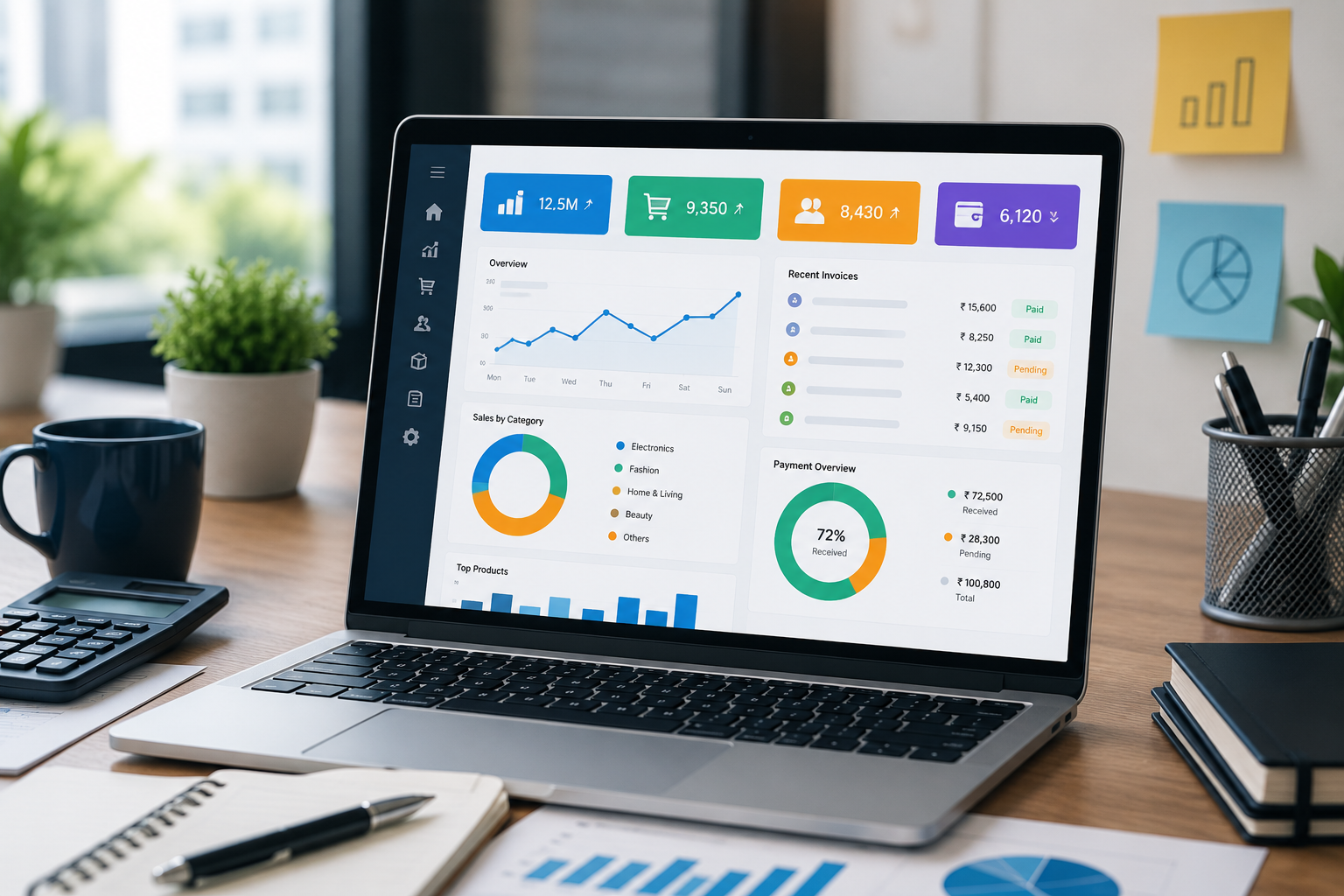
Logic Waves Tech's billing platform includes Sales Reports & Analytics and a business dashboard designed to provide an overview of areas such as revenue, invoices, pending payments, and inventory.
1. Make Decisions Using Current Information
One of the biggest advantages of real-time reporting is access to current business information.
A report prepared at the end of the month may show what happened several weeks ago. While historical information is useful, owners also need to understand what is happening today.
Real-time reporting can help answer questions such as:
- How much have we sold today?
- How many invoices have been generated?
- Are payments being received on time?
- Which products are selling?
- Is inventory running low?
- How is the business performing compared with previous periods?
Having this information available can help owners make decisions without waiting for manual reports.
2. Identify Sales Trends Faster
Sales data can reveal important patterns.
For example, an owner may notice that certain products are selling faster than others or that sales increase during particular periods.
With sales reports and analytics, these patterns can be easier to identify and use for planning.
Logic Waves Tech highlights Sales Reports & Analytics as a feature of its billing system, helping businesses understand their performance through business data.
3. Improve Inventory Decisions
Inventory decisions directly affect sales and customer satisfaction.
If a popular product runs out of stock, the business may lose potential sales. On the other hand, purchasing too much of a slow-moving product can tie up money in inventory.
A real-time view of inventory can help owners identify stock levels and respond before shortages become a serious problem.
The Logic Waves Tech billing platform includes inventory tracking and low-stock alerts as part of its business management features.
4. Monitor Outstanding Payments
Sales figures alone do not provide a complete picture of business performance.
A business may generate strong sales but still experience cash-flow pressure if customers have not paid their outstanding invoices.
Real-time payment information can help owners see which payments are pending and determine where follow-up may be required.
Logic Waves Tech's business dashboard includes pending payment information, while its billing platform provides payment tracking to help businesses monitor dues.
5. Detect Problems Before They Become Bigger
Delayed information can make small problems harder to identify.
For example, a sudden reduction in sales, increasing pending payments, or rapidly falling stock levels may require attention.
When owners can see business information regularly, they have a better opportunity to investigate these changes early rather than discovering them after the problem has already affected operations.
6. Reduce Dependence on Spreadsheets
Many small businesses start with spreadsheets because they are simple and inexpensive.
However, as the business grows, maintaining multiple spreadsheets for sales, inventory, payments, customers, and invoices can become difficult.
Information may be duplicated, updated at different times, or accidentally entered incorrectly.
A centralized billing and reporting system can bring important information into one platform, making it easier to review business performance.
7. Understand Business Performance at a Glance
Business owners do not always have time to study lengthy reports.
A dashboard can make important information easier to understand by presenting key figures in one place.
Logic Waves Tech's billing platform promotes a Smart Dashboard that provides an overview of business performance, including revenue, invoices, pending payments, and inventory.
This type of overview can help owners quickly identify areas that require attention.
8. Plan Purchasing More Effectively
Good purchasing decisions depend on understanding sales and inventory activity.
If reports show that certain products are consistently selling quickly, owners can plan purchases accordingly.
Similarly, slow-moving inventory can be identified and reviewed before additional stock is ordered.
This can help businesses use their available funds more carefully.
9. Improve Customer Service
Business reporting may seem like an internal management function, but it can also affect customers.
When employees have access to accurate information about products, invoices, and payments, they can respond to customer questions more efficiently.
Better visibility can help businesses avoid situations where employees provide outdated information about stock or transaction status.
10. Support Better Financial Planning
Real-time reports can also support financial planning.
Owners can review sales performance, payment collections, and other available business information to understand the current position of the business.
This information can help when planning expenses, inventory purchases, staffing, marketing activities, and future investments.
Reports should not replace proper accounting or professional financial advice, but they can provide useful operational information for everyday business decisions.
Real-Time Reports vs. Manual Reports
| Area | Manual Reporting | Real-Time Reporting |
|---|---|---|
| Data Access | Often delayed | More current |
| Sales Monitoring | Periodic checking | Regular monitoring |
| Inventory Visibility | Manual updates | Current stock information |
| Payment Tracking | Separate records | Centralized information |
| Decision-Making | Based on older data | Based on recent activity |
| Problem Detection | May take longer | Issues can be spotted earlier |
| Business Overview | Multiple files | Centralized dashboard |
What Should Business Owners Monitor?
The exact metrics depend on the type of business, but useful areas may include:
- Sales revenue
- Invoice volume
- Pending payments
- Inventory levels
- Low-stock products
- Customer transactions
- Product performance
- Sales trends
- Payment collection
The goal is not to track every possible number. Instead, owners should focus on information that helps them make practical decisions.
Why Real-Time Reporting Matters as a Business Grows
As transaction volumes increase, business owners have more information to manage.
Trying to understand this information manually can take considerable time.
Real-time reporting can provide a structured way to review business activity and identify changes more quickly.
For growing businesses, this visibility can become increasingly important because decisions about stock, payments, sales, and operations often need to be made without unnecessary delays.
Final Thoughts
Good business decisions depend on good information.
Real-time business reports can help owners understand current sales, inventory, invoices, and payment activity without relying entirely on outdated spreadsheets or manually prepared reports.
A billing platform with dashboards, sales reports, analytics, inventory tracking, and payment information can give owners a clearer view of day-to-day operations. Logic Waves Tech's billing system is designed around these capabilities.