Table of Contents
- Top 10 Benefits of Full Stack Development for Modern Businesses
- What Is Full Stack Development?
- 1. Faster Development Process
- 2. Cost-Effective Development
- 3. Better Team Collaboration
- 4. Easier Maintenance and Troubleshooting
- 5. Scalability for Business Growth
- 6. Faster Time to Market
- 7. Flexible Technology Stack
- 8. Improved User Experience
- 9. Stronger Security Implementation
- 10. Simplified Project Management
- Industries That Benefit from Full Stack Development
- Essential Skills of a Full Stack Developer
- Frequently Asked Questions (FAQs)
- What is full stack development?
- Why is full stack development beneficial for businesses?
- Is full stack development suitable for startups?
- Can full stack developers build complete web applications?
- Which technologies are commonly used in full stack development?
- Final Thoughts
Top 10 Benefits of Full Stack Development for Modern Businesses
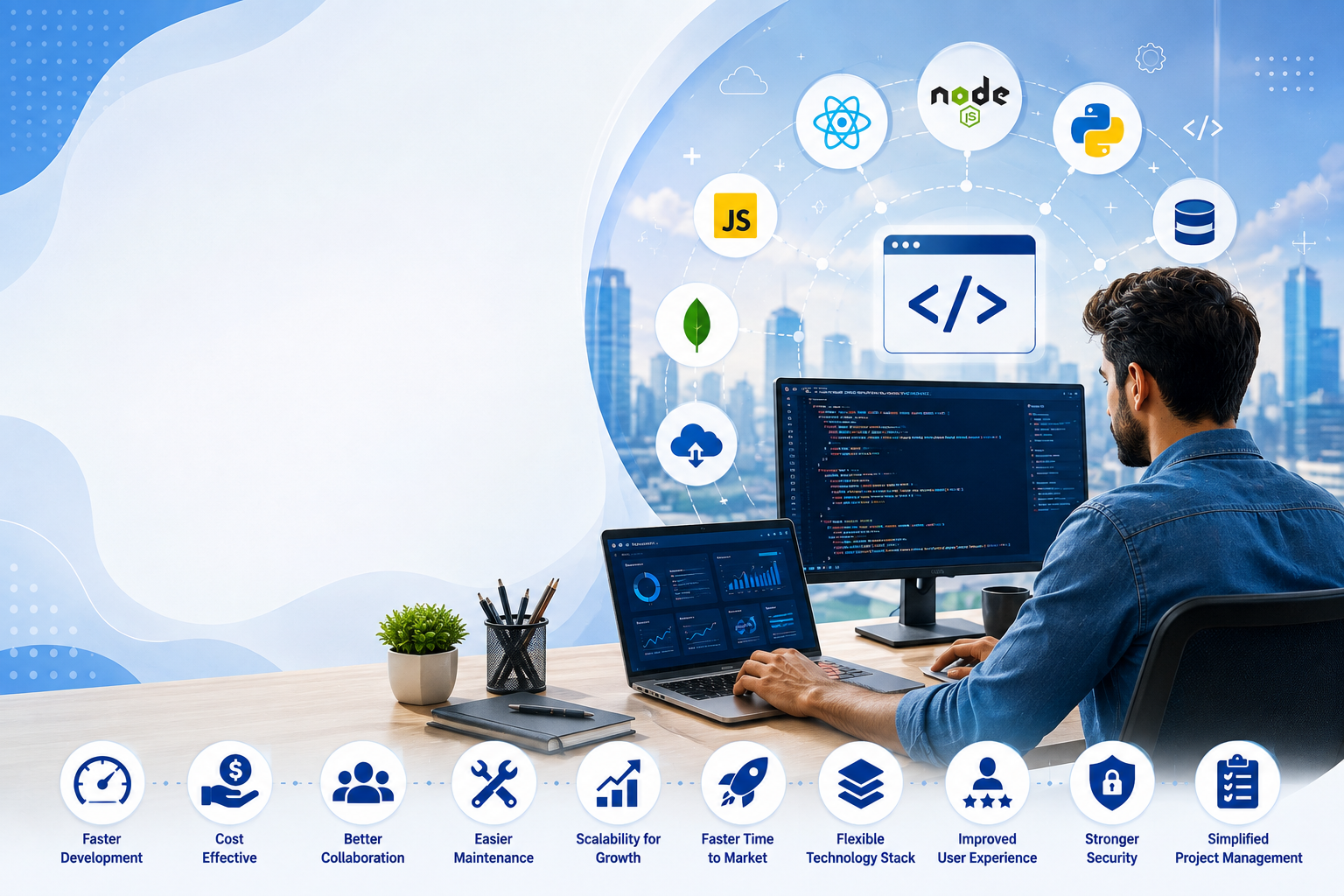
In today's fast-paced digital world, businesses need powerful, scalable, and efficient web applications to stay competitive. Whether you're launching a startup, expanding an e-commerce platform, or building enterprise software, choosing the right development approach is critical. One of the most effective solutions is full stack development, which combines both front-end and back-end expertise to build complete web applications.
A full stack developer can work on the entire application—from designing the user interface to managing databases and server-side logic. This comprehensive skill set enables businesses to streamline development, reduce costs, and bring products to market more quickly.
In this article, we'll explore the top 10 benefits of full stack development and why it has become a preferred choice for modern businesses.
What Is Full Stack Development?
Full stack development involves building both the front end (what users see and interact with) and the back end (the server, database, and application logic) of a web application.
A full stack developer typically works with technologies such as:
Front-End Technologies
- HTML5
- CSS3
- JavaScript
- React
- Angular
- Vue.js
Back-End Technologies
- Node.js
- PHP
- Python
- Java
- .NET
Databases
- MySQL
- PostgreSQL
- MongoDB
Development Tools
- Git
- Docker
- REST APIs
- GraphQL
- Cloud platforms
This broad knowledge allows developers to build complete applications efficiently.
1. Faster Development Process
One of the biggest advantages of full stack development is faster project completion.
Since a full stack developer understands both client-side and server-side technologies, they can work across multiple parts of the application without waiting for separate teams.
Benefits include:
- Faster feature development
- Quicker bug fixes
- Shorter project timelines
- Improved workflow
2. Cost-Effective Development
Hiring a full stack developer can be more cost-effective, particularly for startups and small businesses.
Instead of maintaining separate front-end and back-end teams for every task, businesses can rely on developers who understand multiple aspects of the project.
This can help reduce:
- Hiring costs
- Training expenses
- Communication overhead
- Development time
3. Better Team Collaboration
Full stack developers understand how all components of an application work together.
This enables smoother collaboration with:
- UI/UX designers
- Front-end developers
- Back-end developers
- QA testers
- DevOps engineers
- Project managers
Better communication often leads to fewer misunderstandings and more efficient project delivery.
4. Easier Maintenance and Troubleshooting
Because full stack developers have a broad understanding of the entire application, they can identify and resolve issues more efficiently.
They can troubleshoot:
- User interface problems
- Server errors
- Database issues
- API failures
- Performance bottlenecks
This holistic perspective often reduces downtime and improves system reliability.
5. Scalability for Business Growth
Modern businesses need applications that can grow alongside their operations.
Full stack development supports scalable architectures that can accommodate:
- Increased website traffic
- More users
- Additional features
- Larger databases
- Third-party integrations
A scalable application helps businesses adapt to future demands.
6. Faster Time to Market
Launching products quickly is essential in competitive markets.
With full stack development, businesses can:
- Build MVPs (Minimum Viable Products) faster
- Release updates more frequently
- Respond quickly to customer feedback
- Stay ahead of competitors
A shorter development cycle allows businesses to capitalize on market opportunities sooner.
7. Flexible Technology Stack
Full stack developers are familiar with a variety of programming languages, frameworks, and databases.
This flexibility allows businesses to choose technologies that best fit their needs, whether they're building:
- E-commerce platforms
- ERP systems
- CRM software
- Educational portals
- Healthcare applications
- Business management tools
Developers can recommend solutions based on project goals rather than being limited to a single technology.
8. Improved User Experience
Successful web applications combine attractive design with reliable functionality.
Full stack developers help create:
- Responsive layouts
- Fast-loading pages
- Smooth navigation
- Secure user authentication
- Reliable backend performance
A positive user experience can improve customer satisfaction and retention.
9. Stronger Security Implementation
Security is essential for protecting business data and customer information.
Full stack developers implement best practices such as:
- Secure authentication
- Role-based access control
- Data encryption
- Input validation
- Protection against common web vulnerabilities
- Regular security updates
These measures help reduce security risks and improve trust.
10. Simplified Project Management
When developers understand both the front end and back end, project coordination often becomes more straightforward.
Benefits include:
- Better communication
- Faster decision-making
- Consistent coding practices
- Easier progress tracking
- Reduced dependency between teams
This can contribute to smoother project execution.
Industries That Benefit from Full Stack Development
Many industries rely on full stack development to build modern digital solutions, including:
- E-commerce
- Healthcare
- Education
- Finance
- Real Estate
- Manufacturing
- Logistics
- Travel
- Government
- Technology startups
Its versatility makes it suitable for businesses of all sizes.
Essential Skills of a Full Stack Developer
A skilled full stack developer typically has knowledge of:
- HTML, CSS, and JavaScript
- Front-end frameworks
- Back-end programming languages
- Database management
- RESTful APIs
- Version control (Git)
- Cloud deployment
- Security best practices
- Testing and debugging
- Problem-solving and collaboration
Continuous learning is important as technologies evolve.
Frequently Asked Questions (FAQs)
What is full stack development?
Full stack development involves building both the front end (user interface) and back end (server, database, and application logic) of a web application.
Why is full stack development beneficial for businesses?
It can reduce development costs, improve efficiency, simplify collaboration, and accelerate product delivery by enabling developers to work across the entire application.
Is full stack development suitable for startups?
Yes. Startups often benefit from the flexibility and cost-effectiveness of full stack development, especially during the early stages of product development.
Can full stack developers build complete web applications?
Yes. Full stack developers are capable of developing and maintaining complete web applications, although larger projects may also involve specialized team members.
Which technologies are commonly used in full stack development?
Common technologies include HTML, CSS, JavaScript, React, Angular, Vue.js, Node.js, PHP, Python, Java, MySQL, PostgreSQL, MongoDB, Git, and Docker.
Final Thoughts
Full stack development has become an essential approach for businesses looking to build efficient, scalable, and high-performing web applications. By combining front-end and back-end expertise, full stack developers help organizations reduce costs, speed up development, improve collaboration, and deliver better user experiences.
Whether you're launching a startup, expanding an existing business, or building enterprise software, investing in full stack development can provide the flexibility and technical foundation needed for long-term digital success. As technology continues to evolve, full stack development will remain a valuable asset for businesses seeking innovation and sustainable growth.