Table of Contents
- Why Centralized Customer Records Matter for Growing Businesses
- 1. Keep Customer Information in One Place
- 2. Reduce Duplicate Data Entry
- 3. Access Customer Information Faster
- 4. Improve Customer Service
- 5. Make Invoice Management Easier
- 6. Track Customer Payments More Effectively
- 7. Support Better Follow-Ups
- 8. Help Businesses Understand Customer Activity
- 9. Reduce Dependence on Spreadsheets
- 10. Improve Coordination Between Employees
- 11. Support Business Growth
- 12. Protect and Organize Business Data
- Centralized Customer Records vs. Separate Records
- When Should a Business Centralize Customer Records?
- Final Thoughts
Why Centralized Customer Records Matter for Growing Businesses
As a business grows, the number of customers, invoices, transactions, and interactions grows with it. Managing customer information through notebooks, spreadsheets, emails, or separate files may work in the beginning, but these methods can become difficult to maintain as operations expand.
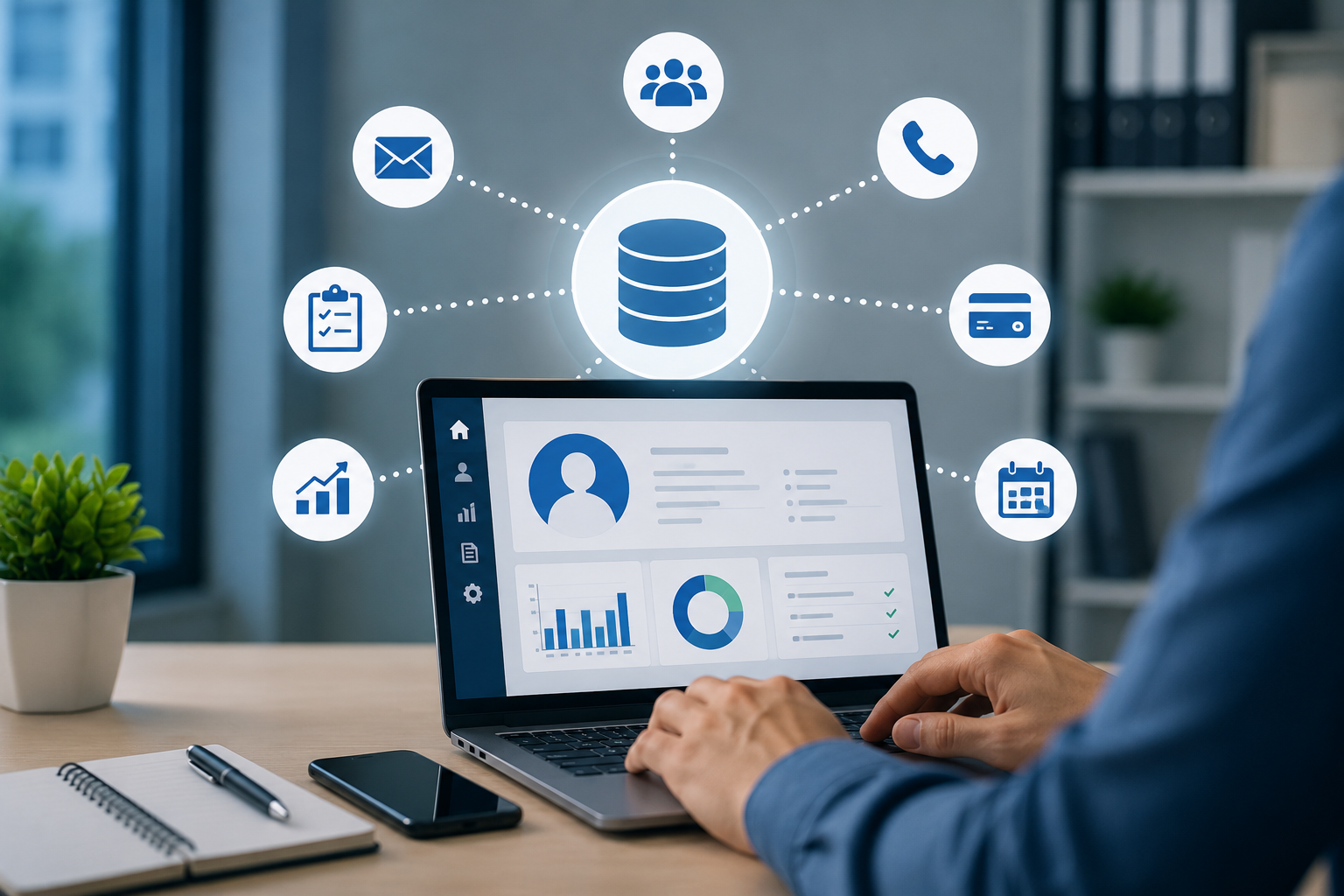
A centralized customer record system provides businesses with a structured way to keep important customer information in one place. This can make everyday operations more organized and help employees provide faster and more consistent service.
Logic Waves Tech's billing solution is designed to bring billing, inventory, payments, customers, and reporting together in one platform, helping growing businesses manage important business information more efficiently.
1. Keep Customer Information in One Place
When customer information is stored across different spreadsheets or files, employees may need to search through multiple sources to find the information they need.
A centralized system allows important customer information to be maintained in one location.
Depending on the business and software configuration, records may include:
- Customer name and contact details
- Invoice history
- Purchase information
- Payment records
- Outstanding dues
- Previous transactions
Having information organized in one system can make everyday customer management easier.
2. Reduce Duplicate Data Entry
Growing businesses often have multiple employees working with customer information.
Without a centralized system, the same customer may be entered into different spreadsheets or records several times.
This can create duplicate information and increase administrative work.
A centralized customer management system can reduce unnecessary duplication by allowing employees to work with the same customer records.
3. Access Customer Information Faster
Customer service often depends on how quickly employees can access relevant information.
For example, a customer may contact a business about a previous invoice or payment. If the employee has to search through several files before finding the information, the response can take longer.
Centralized records make it easier to locate customer information and review relevant transaction details.
This can help employees respond to routine questions more efficiently.
4. Improve Customer Service
Good customer service requires more than simply answering questions.
Employees should have access to accurate information so they can understand the customer's situation and provide appropriate assistance.
When customer information, invoices, and payment details are organized together, employees can spend less time searching for records and more time helping customers.
Logic Waves Tech identifies slow billing and poor service experiences as challenges that can contribute to customer loss.
5. Make Invoice Management Easier
Customer records are closely connected with billing.
When a customer purchases a product or service, the transaction may generate an invoice that needs to be stored and referenced later.
A centralized system can connect customer information with billing activities, making it easier to review transaction history.
Logic Waves Tech's billing platform provides GST billing and professional invoice creation as part of its business management features.
6. Track Customer Payments More Effectively
Payment information is another important part of customer records.
Businesses need to know which invoices have been paid and which amounts are still outstanding.
If payment information is maintained separately from customer and invoice records, employees may have to check multiple sources.
A centralized system can make payment information easier to manage and review.
Logic Waves Tech includes payment tracking to help businesses monitor dues and collect payments more efficiently.
7. Support Better Follow-Ups
Customer follow-ups can become difficult when businesses do not have organized records.
For example, an employee may need to follow up regarding an unpaid invoice or a previous transaction.
With centralized information, employees can identify relevant customer records and determine which actions may require follow-up.
This creates a more structured approach to customer management.
8. Help Businesses Understand Customer Activity
Customer records can provide useful information about business activity.
By reviewing customer transactions and invoices, businesses may identify patterns such as:
- Frequently purchased products
- Repeat customers
- Outstanding payments
- Customer purchase history
- Changes in buying activity
This information can help business owners better understand their customers and make more informed operational decisions.
9. Reduce Dependence on Spreadsheets
Spreadsheets can be useful for small businesses, but they can become difficult to maintain as customer numbers increase.
Problems can occur when:
- Multiple versions of a file exist
- Information is accidentally overwritten
- Employees use different formats
- Records are not updated consistently
- Important information becomes difficult to locate
Moving customer information into a dedicated business system can provide a more structured alternative to managing multiple spreadsheets.
10. Improve Coordination Between Employees
Growing businesses often have different employees handling sales, billing, customer service, inventory, and payments.
If each department maintains separate customer information, communication can become difficult.
A centralized system can provide a common source of business information, helping employees work with more consistent records.
Logic Waves Tech describes its billing platform as a system that brings billing, inventory, payments, customers, and reporting together for growing businesses.
11. Support Business Growth
As the customer base grows, businesses need processes that can handle increasing amounts of information.
A system that works for 50 customers may become difficult to manage when the business has hundreds or thousands of customer records.
Centralizing customer information creates a more organized foundation for growth.
It can also make it easier to introduce additional processes such as reporting, payment tracking, inventory management, and digital invoicing.
12. Protect and Organize Business Data
Customer information is valuable business data and should be handled carefully.
Keeping records in one structured system can make data management more organized than maintaining information across multiple physical files and spreadsheets.
Logic Waves Tech highlights Cloud Backup as one of the features of its billing platform, with business data designed to remain secure and accessible.
Businesses should still follow appropriate security practices and ensure that access to customer information is provided only to authorized users.
Centralized Customer Records vs. Separate Records
| Area | Separate Records | Centralized Records |
|---|---|---|
| Customer Information | Stored across multiple files | Organized in one system |
| Invoice History | May require searching | Easier to access |
| Payment Information | Often maintained separately | Connected with business records |
| Employee Access | Different files and versions | Shared information |
| Data Entry | More duplication | Less repetitive entry |
| Customer Service | More searching | Faster information access |
| Business Growth | Increasingly difficult | Easier to scale |
When Should a Business Centralize Customer Records?
A business should consider centralizing customer records when:
- The number of customers is increasing
- Employees are maintaining multiple customer files
- Customer information is duplicated
- Finding previous invoices takes too long
- Payment records are difficult to track
- Customer service responses are becoming slower
- Multiple employees need access to customer information
- Spreadsheets are becoming difficult to manage
The earlier a business establishes an organized customer record system, the easier it can be to maintain consistent processes as operations grow.
Final Thoughts
Customer information is an important part of everyday business operations. When records are scattered across spreadsheets, notebooks, emails, and separate files, employees can spend unnecessary time searching for information and maintaining duplicate records.
Centralized customer records can make information easier to access, support better billing and payment tracking, improve employee coordination, and help businesses provide a more efficient customer experience.
For growing businesses, bringing customer information together with billing, inventory, payment tracking, and reporting can create a more organized workflow. Logic Waves Tech's billing platform is built around this type of integrated business management approach.