Table of Contents
- AI-Powered Animation: Making Creative Content Faster and Smarter
- What Is AI-Powered Animation?
- How AI Is Used in Animation
- 1. Text-to-Video Generation
- 2. Automatic Lip-Syncing
- 3. Facial and Body Animation
- 4. Image-to-Animation
- 5. AI-Generated Digital Characters
- Benefits of AI-Powered Animation
- Faster Content Production
- Reduced Repetitive Work
- Easier for Beginners
- Lower Production Costs
- More Creative Experimentation
- Better Personalisation
- How Businesses Can Use AI Animation
- Marketing and Advertising
- Product Demonstrations
- Education and Training
- Website Content
- Customer Support
- Entertainment and Gaming
- Challenges of AI Animation
- Inconsistent Results
- Limited Creative Understanding
- Copyright and Ownership
- Misleading Content
- Privacy Concerns
- Does AI Replace Professional Animators?
- Tips for Using AI Animation Effectively
- The Future of AI-Powered Animation
- Final Thoughts
Here is a website-ready article:
AI-Powered Animation: Making Creative Content Faster and Smarter
Animation is widely used in advertisements, films, games, educational videos, social-media content and product presentations. However, traditional animation can require considerable time, technical knowledge and manual effort.
Artificial intelligence is changing this process by helping creators generate movements, animate characters, synchronise speech and produce visual content more efficiently. AI-powered animation does not remove the need for human creativity. Instead, it provides tools that can reduce repetitive work and help creators bring their ideas to life faster.
What Is AI-Powered Animation?
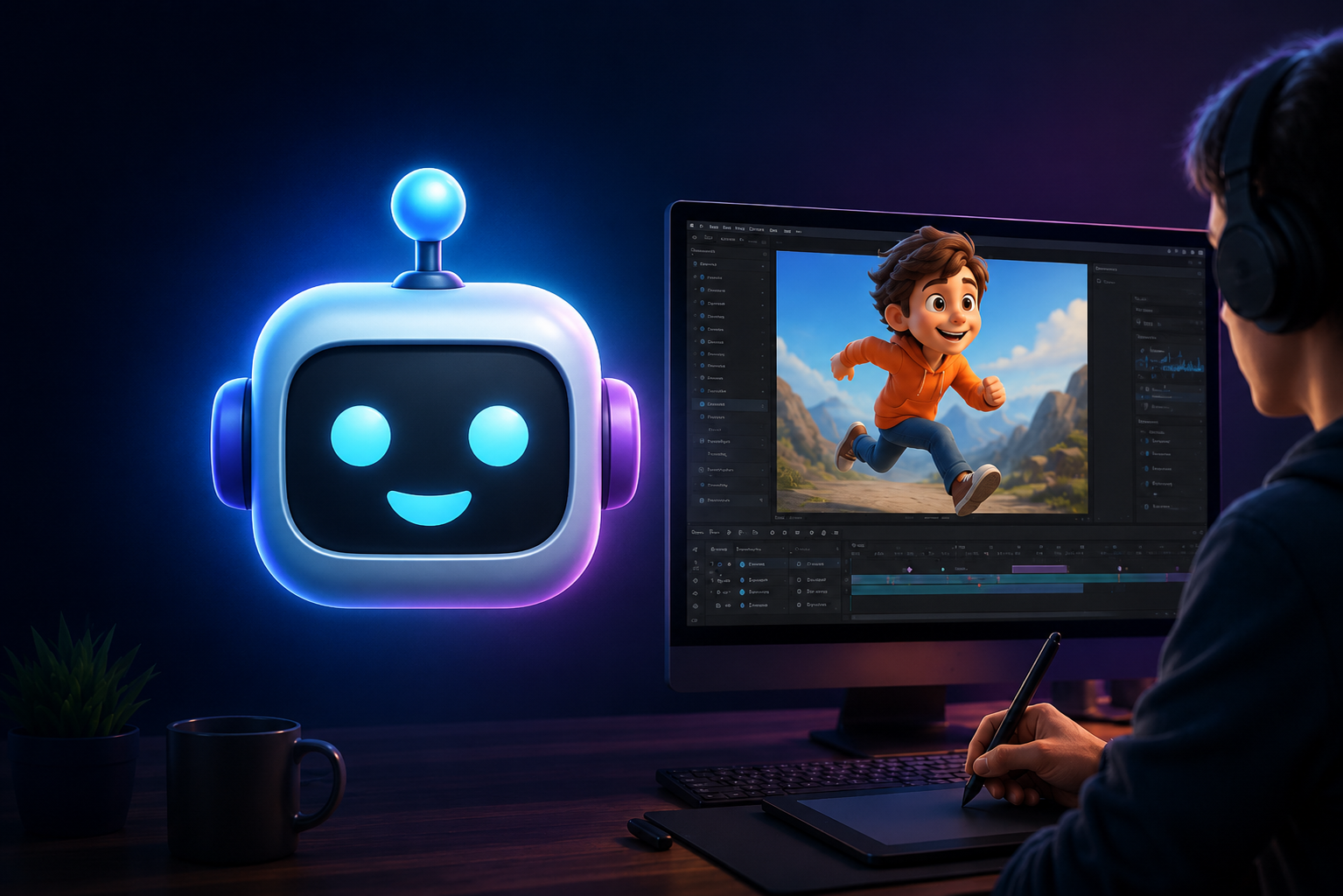
AI-powered animation is the use of artificial intelligence and machine-learning technologies to assist in creating animated content.
Depending on the tool, AI can help creators:
-
Generate videos from written instructions
-
Turn still images into moving scenes
-
Create character movements
-
Synchronise mouth movements with speech
-
Track facial expressions and body movement
-
Generate backgrounds and visual effects
-
Improve video quality
-
Create digital avatars
For example, Adobe Character Animator can use webcam and microphone input for automatic lip-syncing and face or body tracking. NVIDIA’s Audio2Face technology can create facial animation from an audio source. (Adobe)
How AI Is Used in Animation
1. Text-to-Video Generation
Text-to-video systems can create short video scenes from written prompts. A creator can describe a location, character, action or visual style, and the AI generates a video based on those instructions.
Google Research has demonstrated models that support text-to-video, image-to-video, video stylisation and other forms of guided video generation. (sites.research.google)
These tools can be useful for:
-
Marketing concepts
-
Storyboarding
-
Social-media videos
-
Product demonstrations
-
Creative experiments
The generated result may still require editing to improve visual consistency, timing and accuracy.
2. Automatic Lip-Syncing
Matching a character’s mouth movements with recorded dialogue can be a time-consuming task.
AI-assisted lip-sync technology analyses speech and automatically selects or creates suitable mouth movements. This can help animators produce talking characters more quickly while reducing repetitive frame-by-frame work. (Adobe Help Center)
Automatic lip-syncing is useful for:
-
Animated explainers
-
Educational videos
-
Digital presenters
-
Game characters
-
Multilingual content
-
Customer-service avatars
3. Facial and Body Animation
AI can analyse facial expressions, head movements and body positions through a camera or recorded video. It can then transfer those movements to a digital character.
This makes it possible for creators to perform a scene naturally while the software animates the character. AI-based systems are also being developed to generate and control human motion for animation and interactive experiences. (Adobe)
4. Image-to-Animation
AI tools can add movement to still images, illustrations or character designs. A single image may be transformed into a short animated scene with camera motion, facial movement or environmental effects.
This can help businesses and creators reuse existing visual materials for:
-
Social-media posts
-
Promotional videos
-
Digital advertisements
-
Website banners
-
Presentations
-
Storytelling content
5. AI-Generated Digital Characters
AI can assist in creating digital humans, virtual presenters and interactive characters. These characters may speak, respond to users and display facial expressions in real time.
Such technology can be used in video games, virtual assistance, online training, customer support and interactive digital experiences. (NVIDIA Developer)
Benefits of AI-Powered Animation
Faster Content Production
AI can automate tasks such as lip-syncing, facial tracking, background generation and motion creation. This allows creators to produce initial drafts and animated scenes more quickly.
Reduced Repetitive Work
Traditional animation often requires repeated adjustments to individual frames and movements. AI can handle parts of this routine work, giving animators more time to focus on storytelling, design and creative direction.
Easier for Beginners
AI animation tools can help people with limited animation experience create simple visual content. Small businesses, teachers, marketers and content creators can produce basic animations without building every element manually.
Lower Production Costs
By reducing the time required for certain production tasks, AI may help lower the cost of creating short promotional videos, explainers and social-media content.
However, professional-quality projects may still require experienced animators, editors, designers, voice artists and creative directors.
More Creative Experimentation
Creators can test different characters, scenes, movements and visual styles before beginning full production. Rapid experimentation makes it easier to explore ideas and choose the strongest creative direction.
Better Personalisation
Businesses can create different versions of the same animated content for separate audiences, languages, products or platforms. For example, an animated presenter may deliver customised information for different customer groups.
How Businesses Can Use AI Animation
AI-powered animation can support several business activities.
Marketing and Advertising
Businesses can create animated advertisements, promotional clips, product launches and social-media videos that attract attention and communicate information quickly.
Product Demonstrations
Animation can show how a product works, explain its features or demonstrate processes that may be difficult to record with a camera.
Education and Training
Companies and educational organisations can use animated characters, diagrams and visual explanations to make complex topics easier to understand.
Website Content
Animated illustrations, icons and product visuals can make a website more interactive. Animation should be used carefully so that it does not slow down the website or distract visitors.
Customer Support
Digital avatars and animated assistants can explain services, guide users through common steps or answer basic questions.
Entertainment and Gaming
AI can help develop character expressions, dialogue animation, background scenes and movement for games, films and interactive experiences.
Challenges of AI Animation
AI-powered animation offers many advantages, but it also has limitations.
Inconsistent Results
AI-generated scenes may contain unnatural movement, changing character details or visual errors. Human review and editing remain important.
Limited Creative Understanding
AI can follow prompts and recognise patterns, but it does not understand emotion, culture and storytelling in the same way as a human creator. Strong creative direction is still necessary.
Copyright and Ownership
Creators should understand the terms of the AI tools they use. Questions may arise regarding training data, ownership of generated content and the use of protected characters, voices or visual styles.
Misleading Content
AI-generated animation can be used to create realistic but false videos. Businesses should clearly identify synthetic content when necessary and avoid using another person’s face or voice without permission.
Privacy Concerns
Facial tracking, voice recordings and motion-capture systems may process personal information. Organisations should use secure tools and obtain appropriate consent from participants.
Does AI Replace Professional Animators?
AI is more likely to change animation workflows than completely replace animators.
Animation requires imagination, storytelling, emotional understanding, timing, visual direction and knowledge of the audience. AI can generate materials and automate technical tasks, but people must still guide the concept, review the output and make creative decisions.
The strongest results usually come from combining AI efficiency with human creativity.
Tips for Using AI Animation Effectively
To create better AI-assisted animations:
-
Begin with a clear concept and target audience.
-
Write detailed but simple prompts.
-
Keep characters and visual styles consistent.
-
Review every generated scene carefully.
-
Correct unnatural movement and visual errors.
-
Use licensed music, images, voices and design materials.
-
Avoid copying protected characters or artists’ work.
-
Maintain human control over the final message.
-
Be transparent when realistic synthetic media could mislead viewers.
The Future of AI-Powered Animation
AI-animation technology is becoming more capable in video generation, facial movement, digital characters and interactive experiences. Research is also exploring animation-ready avatars and more controllable character motion. (NVIDIA)
Future tools may allow creators to produce more consistent characters, longer scenes and interactive animations using simple instructions. At the same time, responsible use, copyright protection and transparency will become increasingly important.
Final Thoughts
AI-powered animation is making creative content faster, more accessible and easier to experiment with. It can support character animation, lip-syncing, video generation, digital avatars and marketing content.
However, AI should be treated as a creative assistant rather than a complete replacement for human talent. Businesses and creators who combine these tools with original ideas, careful editing and responsible practices can produce engaging content more efficiently.
The future of animation will not depend only on what AI can generate. It will depend on how creatively and responsibly people choose to use it.