Table of Contents
- How Digital Transformation Helps Traditional Businesses Stay Competitive
- What Is Digital Transformation?
- Why Traditional Businesses Need Digital Transformation
- 1. Improve Customer Experience
- 2. Expand Market Reach
- 3. Increase Operational Efficiency
- 4. Make Better Business Decisions
- 5. Reduce Unnecessary Costs
- 6. Strengthen Customer Relationships
- 7. Enable Remote and Flexible Work
- 8. Improve Inventory and Supply Chain Management
- 9. Strengthen Digital Marketing
- 10. Improve Business Security
- 11. Create New Revenue Opportunities
- 12. Stay Competitive in a Changing Market
- How to Start Digital Transformation
- Step 1: Identify Business Challenges
- Step 2: Set Clear Goals
- Step 3: Choose the Right Technology
- Step 4: Train Employees
- Step 5: Start Small
- Step 6: Measure Results
- Common Challenges of Digital Transformation
- The Role of Employees in Digital Transformation
- The Future of Traditional Businesses
- Conclusion
How Digital Transformation Helps Traditional Businesses Stay Competitive
Digital transformation is changing the way businesses operate, communicate with customers, and compete in modern markets. While technology-driven companies often adopt new tools quickly, traditional businesses can also benefit significantly from digital solutions.
For many established businesses, digital transformation does not mean replacing everything they already do. Instead, it involves using technology to improve existing processes, provide better customer experiences, reduce unnecessary costs, and make smarter business decisions.
From digital payments and online marketing to cloud software, automation, data analytics, and customer relationship management, technology can help traditional businesses become more efficient and adaptable.
What Is Digital Transformation?
Digital transformation is the process of using digital technologies to improve business operations, customer experiences, products, services, and decision-making.
It can involve technologies such as:
- Cloud computing
- Artificial intelligence
- Business automation
- Data analytics
- Customer relationship management (CRM)
- Digital payment systems
- E-commerce platforms
- Mobile applications
- Cybersecurity solutions
- Digital marketing tools
The goal is not simply to introduce new technology. Effective digital transformation connects technology with business goals and customer needs.
Why Traditional Businesses Need Digital Transformation
Traditional businesses may have strong customer relationships, industry experience, and established processes. However, customer expectations and competitive environments continue to change.
Customers increasingly expect businesses to provide:
- Online information
- Fast communication
- Digital payment options
- Convenient ordering
- Quick customer support
- Personalized experiences
- Easy access through mobile devices
Businesses that fail to adapt may lose customers to competitors that provide more convenient digital experiences.
Digital transformation allows traditional businesses to modernize while continuing to use the strengths they have developed over the years.
1. Improve Customer Experience
Customer experience is one of the most important areas where technology can make a difference.
Businesses can use websites, mobile applications, chat systems, CRM platforms, and social media to communicate with customers more effectively.
For example, a traditional retail business can allow customers to:
- Browse products online
- Check availability
- Place orders digitally
- Make online payments
- Receive order updates
- Contact customer support
These improvements can make the customer journey more convenient and accessible.
2. Expand Market Reach
Traditional businesses often depend heavily on local customers. Digital platforms can help them reach customers beyond their immediate geographical area.
A business can use:
- Business websites
- Search engine optimization
- Social media marketing
- Online marketplaces
- Email marketing
- Digital advertising
- E-commerce platforms
With the right digital strategy, even a small traditional business can promote its products or services to a much larger audience.
3. Increase Operational Efficiency
Manual processes can consume significant amounts of time and resources.
Digital tools can automate repetitive activities such as:
- Invoicing
- Customer data entry
- Appointment scheduling
- Inventory tracking
- Payroll management
- Email communication
- Report generation
- Order processing
Automation allows employees to spend more time on tasks that require creativity, communication, and problem-solving.
4. Make Better Business Decisions
Data is one of the most valuable resources available to modern businesses.
Digital systems can collect information about:
- Customer behavior
- Sales performance
- Website traffic
- Product demand
- Marketing campaigns
- Inventory
- Customer feedback
Business owners can analyze this information to identify trends and make more informed decisions.
Instead of relying only on assumptions, businesses can use real-time or historical data to understand what is working and where improvements are needed.
5. Reduce Unnecessary Costs
Digital transformation can help businesses identify areas where resources are being wasted.
For example, digital invoicing can reduce paper-related expenses, while automated workflows can reduce the amount of time employees spend on repetitive administrative tasks.
Cloud-based software can also provide businesses with flexible access to important tools and information without requiring extensive physical infrastructure.
However, businesses should evaluate the cost and expected value of each technology before investing.
6. Strengthen Customer Relationships
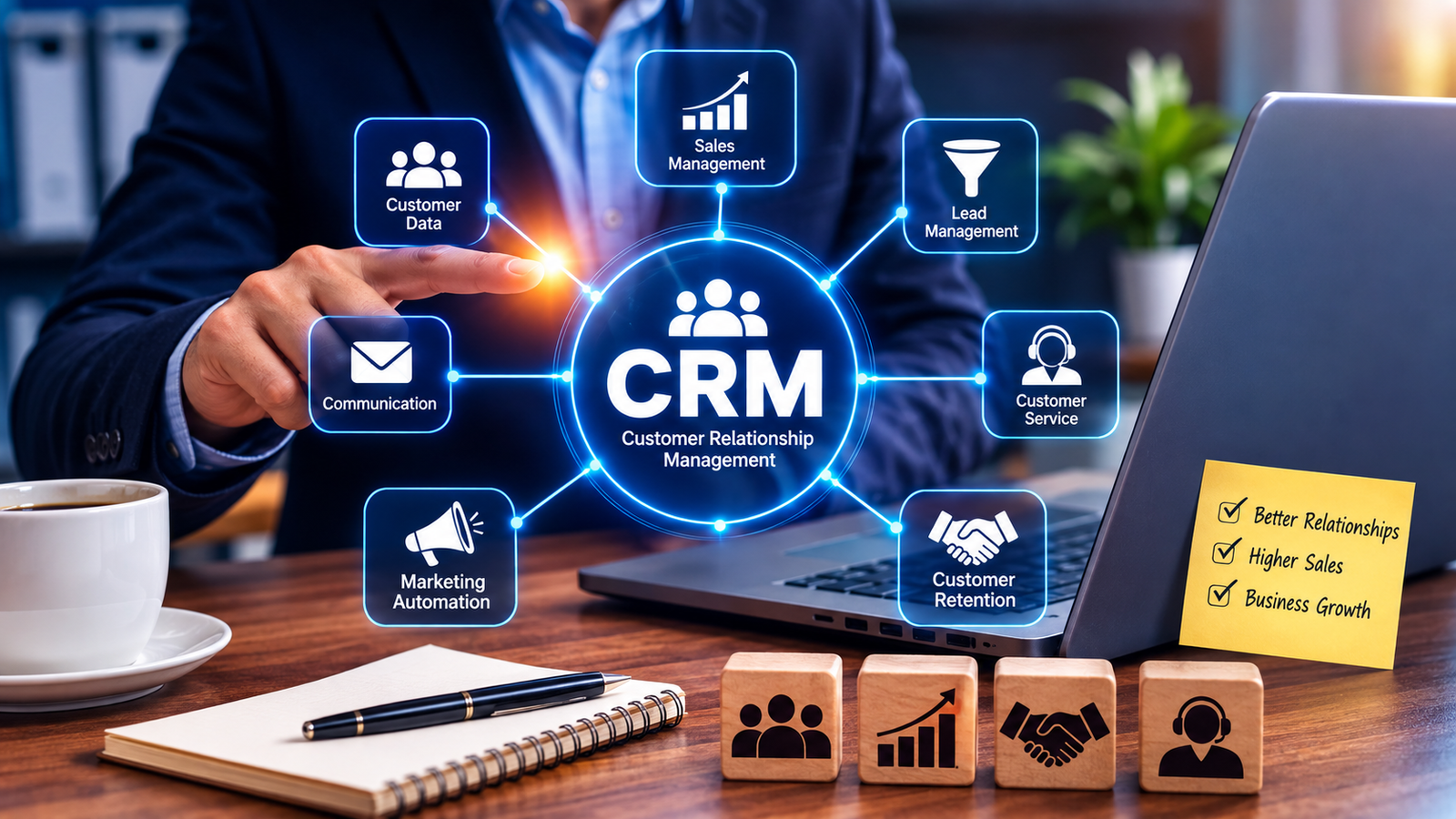
Customer relationship management systems can help businesses organize customer information and communication.
A CRM system can help track:
- Customer inquiries
- Previous purchases
- Follow-ups
- Service requests
- Customer preferences
- Sales opportunities
This information can help businesses provide more consistent and personalized customer service.
For traditional businesses that have relied on personal relationships for many years, digital CRM tools can strengthen rather than replace those relationships.
7. Enable Remote and Flexible Work
Digital transformation has also changed how employees collaborate.
Cloud-based tools, video conferencing, project management platforms, and online communication systems can allow teams to work together from different locations.
Businesses can use digital tools for:
- Team communication
- File sharing
- Project management
- Online meetings
- Task tracking
- Document collaboration
This can provide greater flexibility while helping businesses maintain productivity.
8. Improve Inventory and Supply Chain Management
For retail, manufacturing, distribution, and other product-based businesses, inventory management is critical.
Digital inventory systems can help businesses monitor:
- Stock levels
- Product movement
- Supplier information
- Purchase orders
- Sales trends
- Reorder requirements
Better visibility can reduce the risk of overstocking or running out of important products.
9. Strengthen Digital Marketing
Traditional advertising methods can still be useful, but digital marketing provides additional ways to reach specific audiences.
Businesses can use:
- Search engine optimization
- Social media
- Content marketing
- Email campaigns
- Online advertising
- Video marketing
Digital marketing also provides measurable information about campaign performance.
Businesses can analyze impressions, clicks, engagement, leads, and conversions to understand which strategies produce better results.
10. Improve Business Security
As businesses become more digital, cybersecurity becomes increasingly important.
Traditional businesses adopting digital systems should consider security measures such as:
- Strong passwords
- Multi-factor authentication
- Regular software updates
- Data backups
- Employee security training
- Access controls
- Secure networks
- Security monitoring
Protecting customer and business information is essential for maintaining trust and avoiding costly security incidents.
11. Create New Revenue Opportunities
Digital transformation can create entirely new ways for businesses to generate revenue.
For example, a traditional business may introduce:
- Online sales
- Subscription services
- Digital consultations
- Online bookings
- Delivery services
- Membership programs
- Digital products
Technology can therefore help businesses expand beyond their traditional revenue models.
12. Stay Competitive in a Changing Market
Competition is no longer limited to businesses in the same neighborhood or city.
Digital platforms allow customers to compare products, prices, reviews, and services from businesses across different locations.
Companies that adopt useful digital tools can respond more quickly to changing customer expectations.
Digital transformation can help traditional businesses compete based on:
- Convenience
- Service quality
- Speed
- Personalization
- Accessibility
- Innovation
How to Start Digital Transformation
Businesses do not need to transform everything at once.
A practical approach is to begin with areas where technology can provide the greatest value.
Step 1: Identify Business Challenges
Start by identifying processes that are slow, expensive, repetitive, or difficult to manage.
Step 2: Set Clear Goals
Define what you want to achieve.
For example:
- Increase online sales
- Improve customer service
- Reduce manual work
- Improve inventory management
- Generate more leads
- Improve communication
Step 3: Choose the Right Technology
Select tools based on business requirements rather than simply choosing the newest technology.
Step 4: Train Employees
Employees need to understand how new systems work and why they are being introduced.
Proper training can make technology adoption easier and reduce resistance to change.
Step 5: Start Small
Begin with one or two important areas before expanding the digital transformation strategy.
Step 6: Measure Results
Track key performance indicators such as productivity, customer satisfaction, sales, costs, website traffic, and lead generation.
Use the results to determine what should be improved or expanded.
Common Challenges of Digital Transformation
Digital transformation can provide many benefits, but businesses may also face challenges.
Common obstacles include:
- Initial technology costs
- Employee resistance
- Lack of technical knowledge
- Data security concerns
- Poor technology selection
- Difficulty integrating older systems
- Lack of clear strategy
- Insufficient employee training
These challenges can be reduced through careful planning, appropriate training, and gradual implementation.
The Role of Employees in Digital Transformation
Technology alone cannot transform a business.
Employees play an important role in successful digital adoption. Businesses should involve employees in the process, explain the benefits of new systems, and provide adequate training.
Encouraging employees to share feedback can also help identify problems and improve implementation.
The Future of Traditional Businesses
Digital transformation will continue to influence traditional industries.
Artificial intelligence, automation, cloud computing, data analytics, and connected digital platforms are likely to create new opportunities for businesses of different sizes.
Traditional businesses do not necessarily need to become technology companies. Instead, they can use technology strategically to improve what they already do well.
The combination of industry experience and modern digital capabilities can create a strong competitive advantage.
Conclusion
Digital transformation can help traditional businesses remain competitive by improving customer experience, increasing operational efficiency, expanding market reach, strengthening customer relationships, and supporting better decision-making.
Successful transformation does not require a business to change everything overnight. The most effective approach is to identify specific challenges, choose appropriate technologies, train employees, measure results, and continuously improve.
For traditional businesses, embracing digital transformation is not simply about keeping up with technology. It is about creating a more efficient, customer-focused, flexible, and sustainable business for the future.