Table of Contents
- How Digital Twins Could Transform Business Operations
- How Digital Twins Help Businesses
- 1. Improve Operational Efficiency
- 2. Enable Predictive Maintenance
- 3. Test Changes Virtually
- 4. Improve Decision-Making
- 5. Optimize Supply Chains
- 6. Reduce Energy Consumption
- Digital Twins and AI
- Challenges
- Final Thoughts
How Digital Twins Could Transform Business Operations
Digital twins are becoming an important technology for businesses looking to improve efficiency, reduce costs, and make better operational decisions. A digital twin is a virtual representation of a physical object, process, or system that can be updated using real-world data.
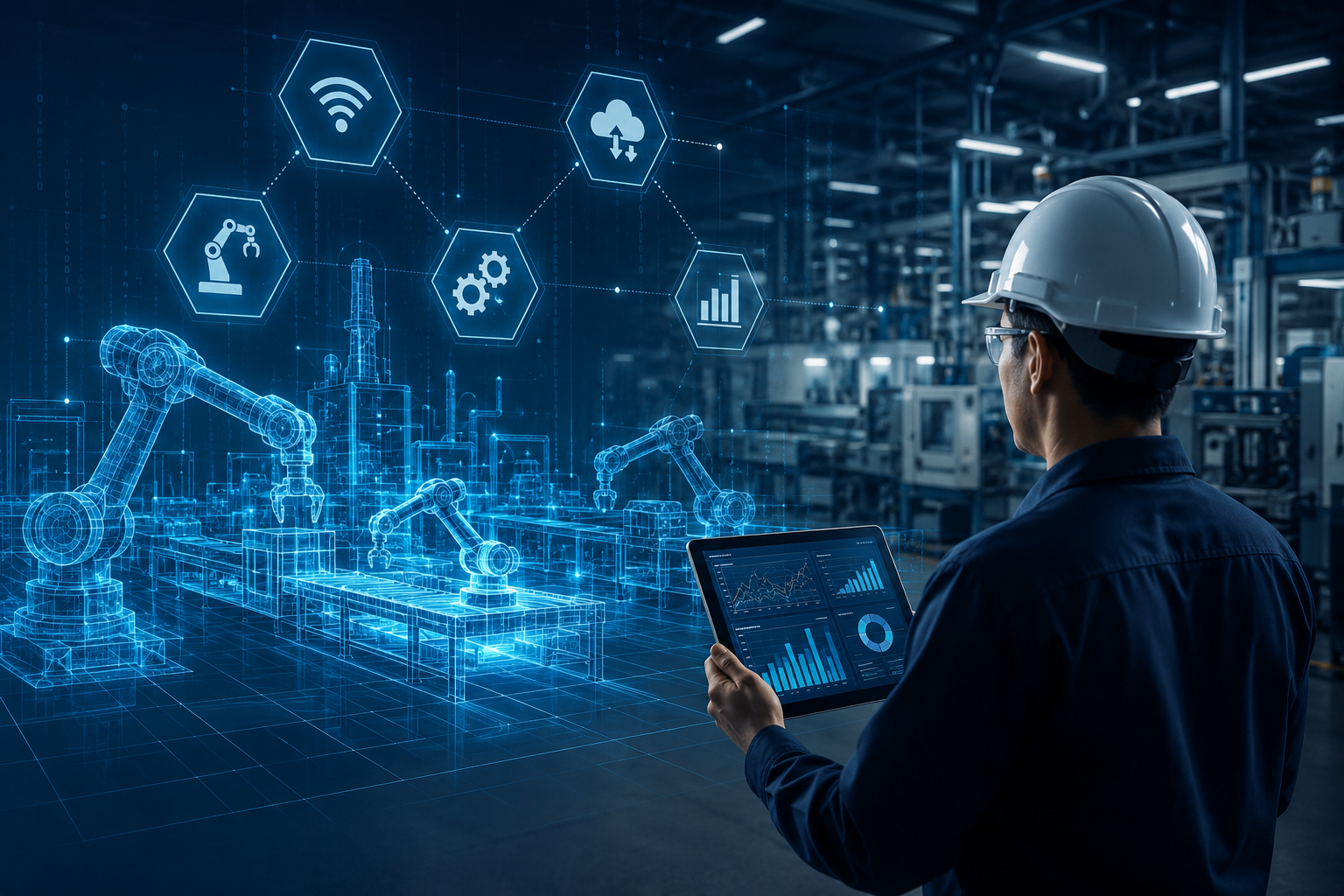
For example, a manufacturing company can create a digital twin of a machine and use sensor data such as temperature, vibration, speed, and energy consumption to monitor its condition.
How Digital Twins Help Businesses
1. Improve Operational Efficiency
Digital twins can help businesses identify bottlenecks, resource waste, inefficient processes, and equipment problems.
2. Enable Predictive Maintenance
By monitoring equipment conditions, businesses can identify unusual patterns and potential failures before they cause unexpected downtime.
3. Test Changes Virtually
Companies can use digital twins to test new production layouts, workflows, equipment, or schedules digitally before making expensive real-world changes.
4. Improve Decision-Making
Digital twins can combine real-time data with analytics to help businesses understand possible outcomes and make more informed decisions.
5. Optimize Supply Chains
Businesses can model suppliers, warehouses, transportation, and inventory to identify delays and explore alternative strategies.
6. Reduce Energy Consumption
Digital twins can monitor energy usage in buildings and industrial facilities, helping organizations identify areas where energy can be saved.
Digital Twins and AI
Artificial intelligence can make digital twins even more useful by analyzing large amounts of data and identifying patterns.
AI can help with:
- Predicting equipment failures
- Forecasting demand
- Detecting unusual behavior
- Identifying bottlenecks
- Optimizing business processes
When combined with IoT sensors, cloud computing, and analytics, digital twins can provide businesses with a more detailed view of their operations.
Challenges
Implementing digital twins can require significant investment in sensors, software, cloud infrastructure, data integration, and skilled professionals. Businesses also need to consider data quality, cybersecurity, privacy, and integration with existing systems.
A practical approach is to start with one specific business problem, measure the results, and expand the technology gradually.
Final Thoughts
Digital twins can help businesses connect physical operations with digital intelligence. They can improve monitoring, predictive maintenance, supply-chain planning, energy efficiency, and decision-making.
As AI, IoT, cloud computing, and data analytics continue to advance, digital twins could become an important part of how modern businesses optimize operations and prepare for future challenges.