How to Protect Business Data When Using Online Management Software

Introduction
Businesses increasingly rely on online management software to handle daily operations, manage customers, track sales, process invoices, maintain employee records, and monitor inventory. These digital systems help organizations save time, improve collaboration, and access important information from different locations.
However, storing business information online also introduces security responsibilities. Customer details, financial records, employee information, supplier data, and confidential business documents can become targets for cybercriminals if accounts and systems are not properly protected.
A compromised account, accidental data exposure, phishing attack, or ransomware incident can disrupt operations and damage customer trust. For small businesses in particular, recovering from a security incident can consume valuable time and resources.
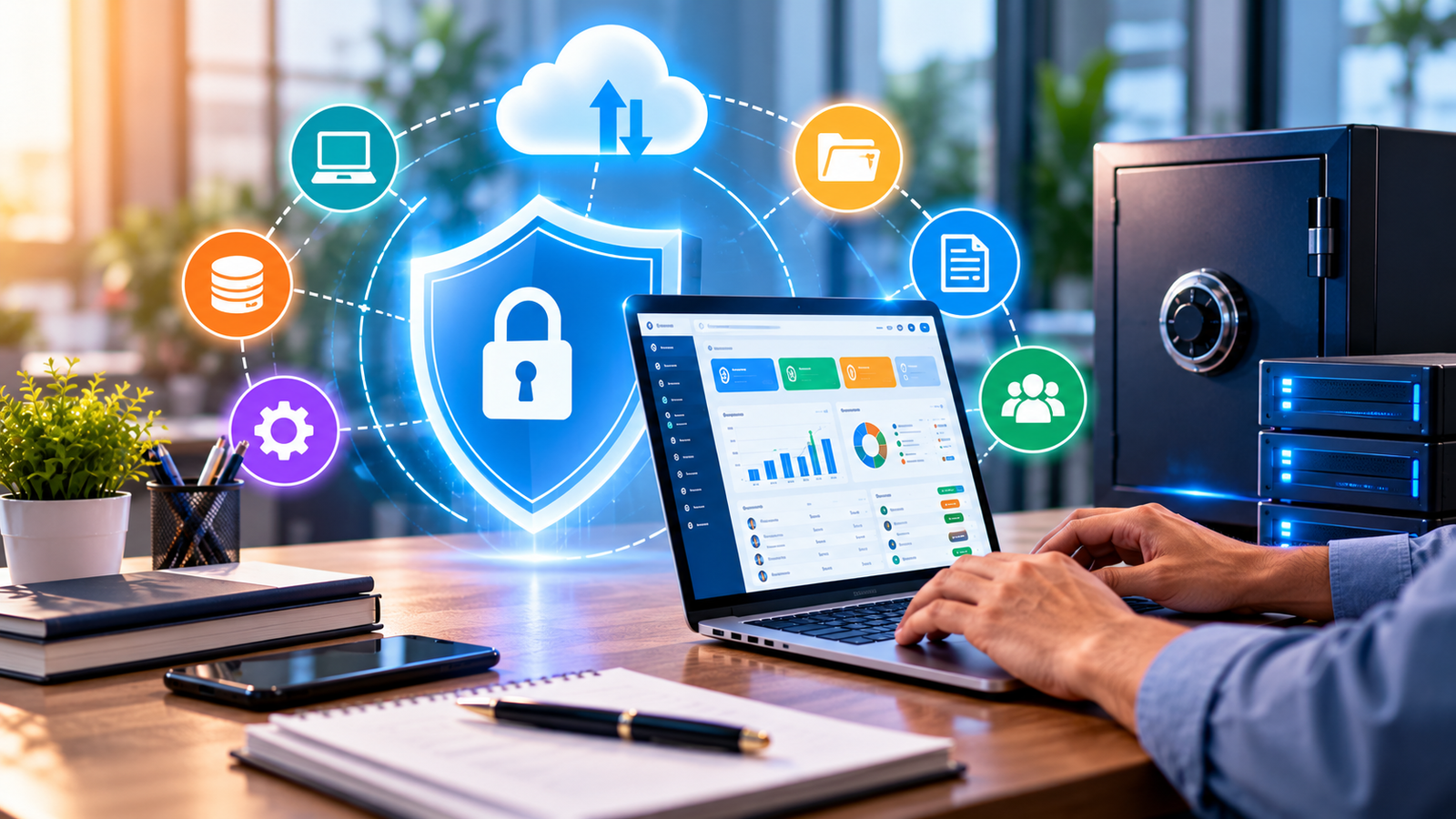
The good news is that businesses can reduce many common risks by following practical security measures and choosing reliable software providers. Protecting business data requires a combination of secure technology, responsible employee practices, controlled access, and regular backups.
In this article, we explain how businesses can protect sensitive information when using online management software and how to build safer digital workflows.
What Is Online Management Software?
Online management software is a digital application accessed through the internet that helps businesses organize and manage their operations. It may be hosted by a third-party provider or operated through a company's own online infrastructure.
Common examples include:
-
Customer relationship management (CRM) software.
-
Enterprise resource planning (ERP) systems.
-
Accounting and billing software.
-
Inventory management systems.
-
School and employee management software.
-
Project management platforms.
-
Online document storage and collaboration tools.
These systems often store important business information in centralized databases. While centralization makes information easier to access and manage, it also means businesses must pay attention to account security, permissions, data handling, and recovery procedures.
Why Business Data Security Matters
Business data is an important asset. Losing access to it or exposing it to unauthorized people can affect daily operations, customer relationships, and financial performance.
Here are some common risks businesses should understand.
1. Unauthorized Access
Weak passwords, compromised accounts, and excessive user permissions may allow unauthorized individuals to view or modify sensitive information.
2. Phishing and Social Engineering
Cybercriminals may send convincing emails, messages, or fake login pages to trick employees into revealing passwords or approving fraudulent requests.
3. Accidental Data Exposure
Employees may share confidential documents with the wrong person, grant excessive permissions, or upload sensitive information to an unapproved platform.
4. Malware and Ransomware
Malicious software can disrupt business systems, steal information, or make important files inaccessible.
5. Data Loss
Accidental deletion, system failures, configuration mistakes, and security incidents can result in missing or corrupted records if appropriate backups are unavailable.
6. Third-Party Security Risks
Businesses may depend on external software providers, integration partners, or service vendors. Weak security in one part of this ecosystem can create risks for connected systems.
Understanding these risks helps businesses choose appropriate safeguards instead of relying solely on a software provider's reputation.
1. Choose a Reliable and Secure Software Provider
Data protection begins before you create an account or upload business information. Selecting a trustworthy software provider is one of the most important decisions a business can make.
Before choosing an online management platform, evaluate its security practices, service reliability, data handling policies, and support arrangements.
Look for the following:
-
Secure connections using HTTPS and modern TLS.
-
Clearly documented security and privacy policies.
-
Encryption practices for stored and transmitted data.
-
Multi-factor authentication support.
-
Role-based user permissions.
-
Regular security updates and vulnerability management.
-
Reliable backup and recovery procedures.
-
Audit logs or activity monitoring.
-
Clear procedures for reporting security incidents.
-
Transparent information about data export, retention, and deletion.
Ask the provider where data is stored, which parties can access it, how it is backed up, and what happens if you stop using the service.
Where appropriate for your business, review independent security certifications or assurance reports and confirm that their scope covers the service you intend to use.
Practical tip: Do not select software based on price or features alone. Evaluate security, usability, support, and the provider's ability to meet your business requirements.
Want this for your business?
Talk to our team — free consultation, clear advice.