Table of Contents
- How a Billing System Helps Businesses Control Daily Cash Flow
- What Is Daily Cash Flow?
- Why Cash Flow Tracking Is Important
- 1. Get a Clear View of Daily Sales
- 2. Track Different Payment Methods
- 3. Manage Credit Sales and Outstanding Payments
- 4. Keep Sales and Inventory Connected
- 5. Monitor Business Expenses
- 6. Reduce Manual Calculation Errors
- 7. Compare Daily Collection With Sales
- 8. Get Faster Daily Reports
- 9. Improve Staff Accountability
- 10. Make Better Business Decisions
- Manual Records vs. Digital Billing
- A Billing System Is More Than an Invoice Generator
- Conclusion
How a Billing System Helps Businesses Control Daily Cash Flow
Managing daily cash flow is one of the most important responsibilities for any business. Whether you run a retail shop, restaurant, supermarket, pharmacy, showroom, or service business, knowing how much money comes in and where it goes helps you maintain better financial control.
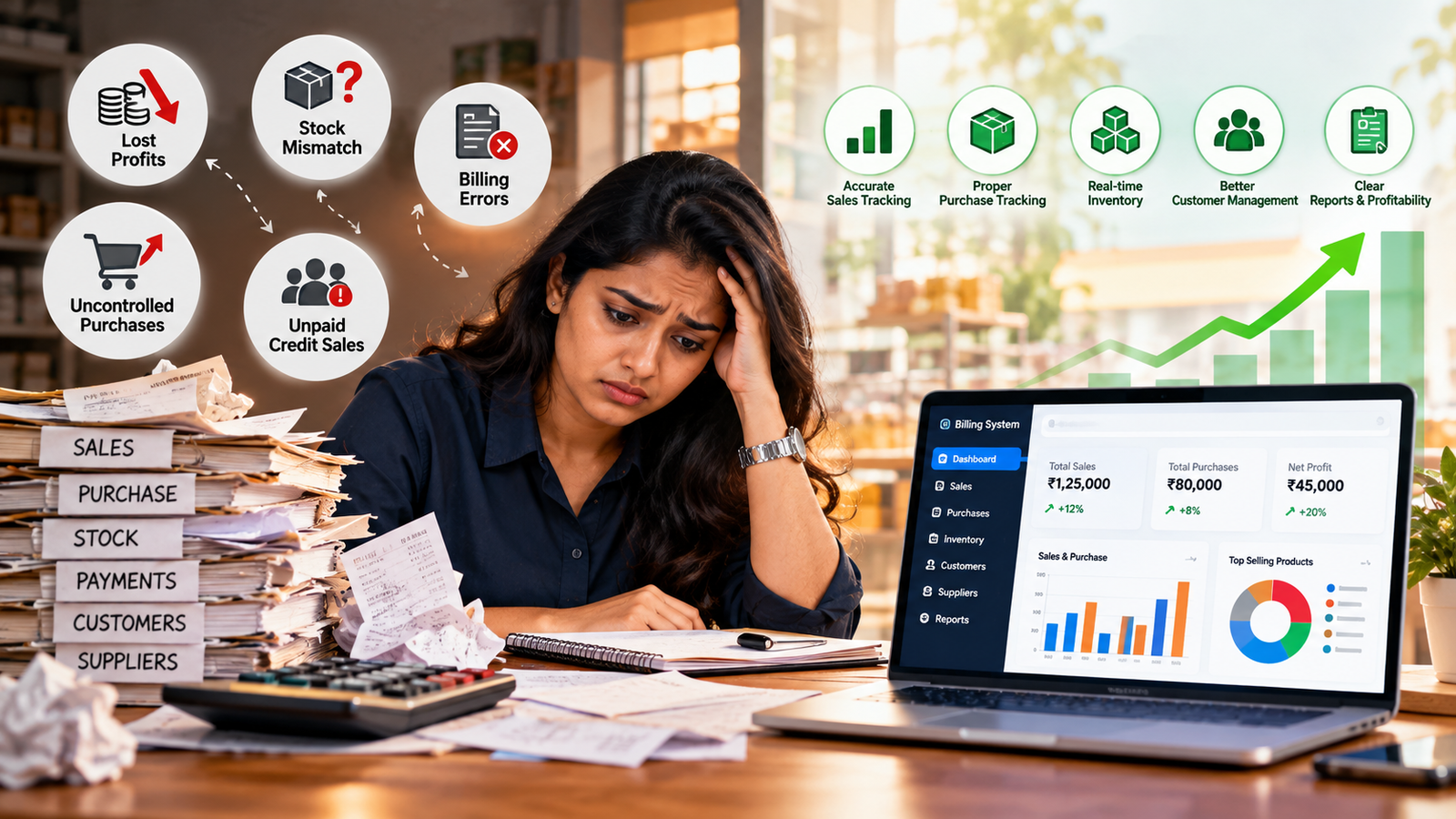
Many small businesses still depend on notebooks, spreadsheets, calculators, or separate records to track daily sales and payments. These methods can make it difficult to get an accurate picture of the business's financial position.
A modern billing system can bring sales, payments, invoices, expenses, and customer transactions together in one place, helping business owners monitor daily cash flow more efficiently.
What Is Daily Cash Flow?
Daily cash flow refers to the money entering and leaving a business during its daily operations.
Money coming into the business may include:
-
Cash sales
-
UPI payments
-
Credit and debit card payments
-
Online payments
-
Customer outstanding payments
-
Advance payments
Money going out may include:
-
Supplier payments
-
Operating expenses
-
Staff expenses
-
Purchases
-
Transportation costs
-
Utility bills
-
Other business expenses
Tracking these transactions regularly helps business owners understand whether the business is generating enough cash to meet its day-to-day requirements.
Why Cash Flow Tracking Is Important
A business can have good sales and still face cash-flow problems. For example, a shop may generate significant sales through credit transactions, but the money may not have been collected yet.
Without proper tracking, business owners may not know:
-
How much money was collected today
-
How much is still outstanding
-
Which payment methods were used
-
How much was spent on purchases
-
What expenses were recorded
-
How much cash should be available at the end of the day
A billing system can organize these transactions and make the information easier to review.
1. Get a Clear View of Daily Sales
A billing system records each transaction when a sale is completed. Instead of manually adding bills at the end of the day, business owners can view sales information directly from the system.
Daily reports can help show:
-
Total sales
-
Number of invoices
-
Cash sales
-
UPI transactions
-
Card payments
-
Credit sales
-
Cancelled or returned bills
This gives the business a clearer picture of its daily revenue activity.
2. Track Different Payment Methods
Modern businesses accept payments through multiple channels. Customers may pay using cash, UPI, cards, bank transfers, or other digital methods.
Keeping all payment information manually can create confusion.
A billing system can categorize transactions based on payment mode, making it easier to compare recorded sales with actual collections.
For example:
Today's Sales: ₹45,000
-
Cash: ₹12,000
-
UPI: ₹18,000
-
Card: ₹10,000
-
Credit: ₹5,000
This simple breakdown can help the owner understand how much money was actually collected and how much remains outstanding.
3. Manage Credit Sales and Outstanding Payments
Credit sales can have a major impact on cash flow.
A business may sell products worth ₹20,000 today, but if ₹8,000 was sold on credit, only ₹12,000 may have been collected immediately.
A billing system can maintain customer outstanding records and help businesses track pending payments.
Owners can identify:
-
Customer name
-
Invoice amount
-
Amount paid
-
Outstanding balance
-
Invoice date
-
Payment history
This makes follow-up easier and reduces the chances of forgetting pending collections.
4. Keep Sales and Inventory Connected
Cash flow is also connected to inventory management.
When a product is sold, the stock quantity should be updated. When new stock is purchased, inventory should increase.
A connected billing and inventory system helps maintain a consistent record of these transactions.
For example, if a retailer purchases 100 units and sells 35 units, the system can help the business monitor the remaining stock.
This can help prevent unnecessary purchases and reduce the amount of money tied up in excess inventory.
5. Monitor Business Expenses
Sales are only one part of cash flow. Businesses also need to understand their daily expenses.
Expenses can include:
-
Electricity
-
Internet
-
Transportation
-
Packaging
-
Maintenance
-
Staff-related expenses
-
Office expenses
-
Other operational costs
Recording expenses along with sales gives business owners a more complete view of their daily financial activity.
6. Reduce Manual Calculation Errors
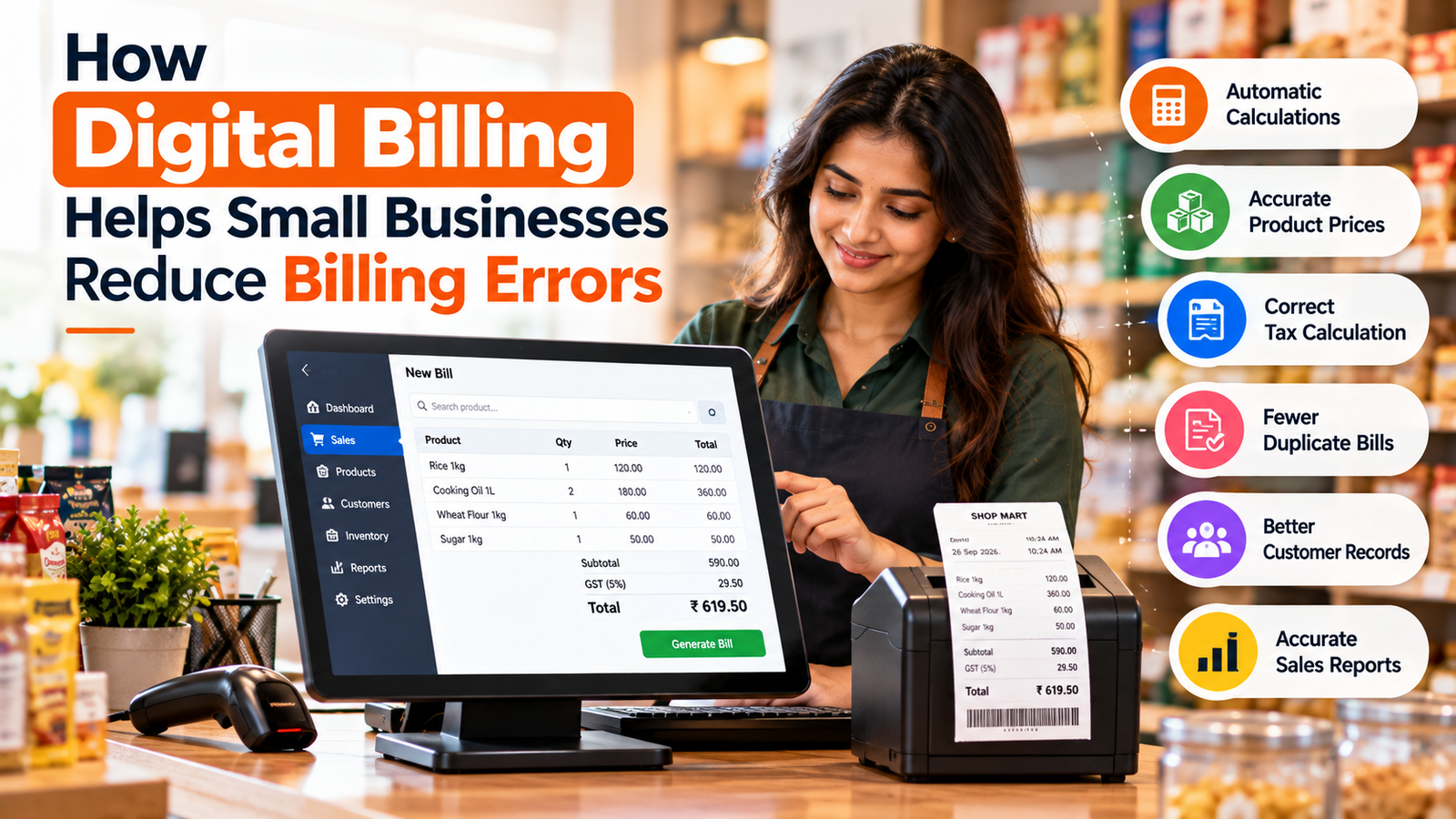
Manual calculations can lead to mistakes in totals, discounts, taxes, payment amounts, or outstanding balances.
A billing system can automatically calculate invoice totals based on the information entered.
This can reduce repetitive calculations and make transaction records more consistent.
It also makes it easier to locate the original invoice when a transaction needs to be checked later.
7. Compare Daily Collection With Sales
One useful function of a billing system is the ability to compare sales with collections.
For example:
Total Sales: ₹60,000
Amount Collected: ₹52,000
Credit Sales: ₹8,000
This helps the owner understand why the amount collected is lower than total sales.
Instead of relying on assumptions, the business can review the payment and outstanding records.
8. Get Faster Daily Reports
Business owners often need answers to simple questions:
-
How much did we sell today?
-
How many bills were generated?
-
Which payment method was used most?
-
How much credit was given?
-
What amount is outstanding?
-
Which products sold the most?
-
How much stock remains?
A billing system can generate reports based on the transactions recorded in the system.
This can save time compared with manually preparing reports from notebooks or spreadsheets.
9. Improve Staff Accountability
When multiple employees generate bills, it can become difficult to identify who processed a particular transaction using manual records.
A billing system can provide user-based access and transaction records.
Depending on the system configuration, businesses can track:
-
User who created the invoice
-
Invoice time
-
Sales amount
-
Discounts
-
Returns
-
Payment method
This provides better visibility into daily operations.
10. Make Better Business Decisions
Accurate transaction records can help business owners make better operational decisions.
For example, sales reports may reveal that certain products sell quickly while others remain in stock for longer periods.
The business can use this information when deciding:
-
What to purchase
-
How much stock to maintain
-
Which products need promotion
-
When to reorder
-
Which customers have outstanding payments
-
Where unnecessary expenses can be reduced
Instead of making decisions based only on memory, owners can use actual business data.
Manual Records vs. Digital Billing
| Manual Records | Digital Billing System |
|---|---|
| More manual calculations | Automated calculations |
| Difficult to search old bills | Faster invoice searching |
| Separate sales and stock records | Sales and inventory can be connected |
| Difficult outstanding tracking | Customer outstanding records |
| Manual daily reports | Automated reports |
| Higher risk of entry mistakes | More consistent transaction recording |
| Limited visibility | Dashboard and reporting |
A Billing System Is More Than an Invoice Generator
A modern billing system should not be viewed simply as a tool for printing invoices.
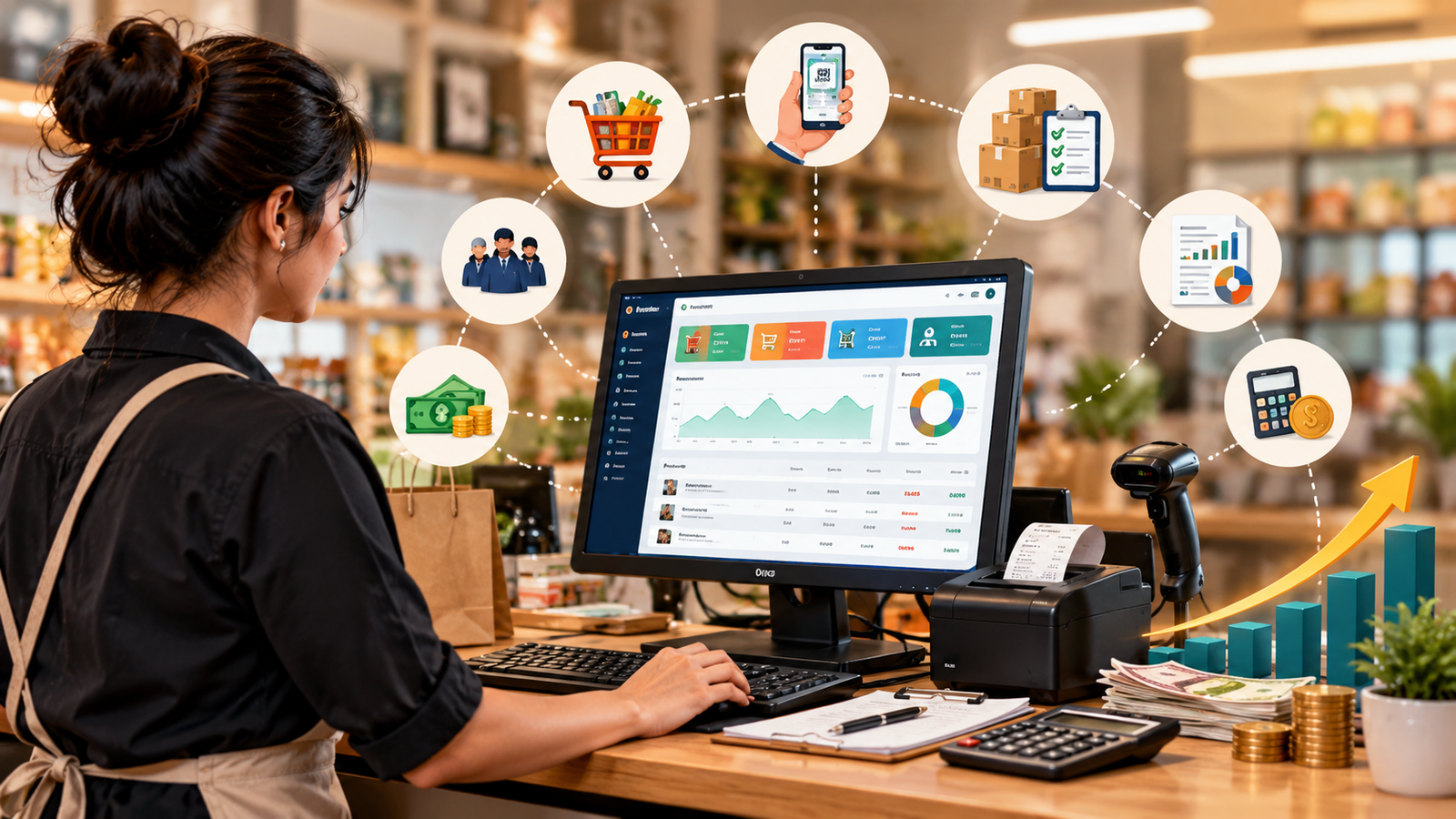
When properly configured, it can become a central system for managing important daily business transactions.
It can connect:
Sales → Payments → Customers → Inventory → Purchases → Expenses → Reports
This connection gives business owners a better understanding of what is happening in their business every day.
Conclusion
Controlling cash flow starts with knowing exactly what is happening with sales, collections, expenses, purchases, and outstanding payments.
A modern billing system can bring these records together and make them easier to monitor. Instead of spending hours checking notebooks or spreadsheets, business owners can access organized transaction information and daily reports from one system.
For growing businesses, better billing and cash-flow tracking can provide greater visibility into daily operations and support more informed business decisions.
If your business needs a solution that combines billing, inventory, customer management, payment tracking and business reports, a dedicated billing system can help bring these processes into one organized platform.