Table of Contents
- Why Businesses Lose Money Without Proper Sales and Purchase Tracking
- What Is Sales and Purchase Tracking?
- How Poor Tracking Can Cause Business Losses
- 1. Missing Sales Records
- 2. Incorrect Stock Information
- 3. Buying Products at the Wrong Price
- 4. Uncontrolled Purchasing
- 5. Difficulty Calculating Actual Profit
- 6. Credit Sales Can Become Difficult to Manage
- 7. Supplier Payments May Be Missed
- 8. Billing Errors Can Reduce Revenue
- Why Sales and Purchases Should Be Connected
- Manual Tracking vs Digital Tracking
- How a Billing System Helps
- Better Tracking Leads to Better Business Decisions
- The Real Cost of Poor Record Keeping
- Conclusion
Why Businesses Lose Money Without Proper Sales and Purchase Tracking
For any business, knowing how much you sell and how much you spend is essential for maintaining profitability. Whether it is a retail shop, restaurant, supermarket, pharmacy, showroom, or service business, poor sales and purchase tracking can quietly lead to financial losses.
Many businesses still depend on notebooks, spreadsheets, separate bills, or manual calculations to record transactions. While these methods may work for a small number of transactions, they become difficult to manage as the business grows.
A proper billing and business management system can connect sales, purchases, inventory, payments, and reports in one place, helping business owners understand where money is coming from and where it is going.
What Is Sales and Purchase Tracking?
Sales tracking means maintaining accurate records of products or services sold to customers. It can include:
-
Product or service details
-
Quantity sold
-
Selling price
-
Discounts
-
Taxes
-
Payment method
-
Customer information
-
Date and time of sale
Purchase tracking records products or materials purchased from suppliers, including:
-
Supplier details
-
Purchase quantity
-
Purchase price
-
Taxes
-
Discounts
-
Payment status
-
Purchase date
-
Outstanding supplier payments
When both sales and purchases are properly recorded, businesses can get a clearer picture of their actual financial position.
How Poor Tracking Can Cause Business Losses
1. Missing Sales Records
When sales are recorded manually, transactions can be missed or entered incorrectly.
Even a few missed transactions every day can create a significant difference over a month. Business owners may think sales are lower than they actually are, while cash or stock may not match the records.
A digital billing system can automatically record every completed transaction and maintain a centralized sales history.
2. Incorrect Stock Information
Sales and purchases directly affect inventory.
If purchased stock is not recorded correctly or sold items are not deducted from inventory, the stock quantity shown in the records may not match the actual stock available.
This can result in:
-
Unexpected stock shortages
-
Overstocking
-
Missed sales
-
Unnecessary purchases
-
Difficulty identifying damaged or missing products
Connecting billing with inventory helps keep stock information updated as transactions happen.
3. Buying Products at the Wrong Price
Without proper purchase records, businesses may find it difficult to compare supplier prices over time.
For example, if a product was previously purchased for ₹100 and the latest supplier is charging ₹120, the increase may go unnoticed.
Purchase history allows business owners to review previous purchase prices and make more informed purchasing decisions.
4. Uncontrolled Purchasing
Businesses can lose money by purchasing products they already have in sufficient quantities.
Without accurate purchase and inventory information, staff may order additional stock simply because they do not know what is currently available.
Proper purchase tracking makes it easier to see:
-
Current stock
-
Previous purchases
-
Fast-moving products
-
Slow-moving products
-
Reorder requirements
This can help reduce unnecessary inventory expenses.
5. Difficulty Calculating Actual Profit
Sales alone do not show whether a business is profitable.
Suppose a product is sold for ₹500. If the purchase cost is ₹400, the apparent gross margin is ₹100. But additional discounts, taxes, expenses, and other costs may affect the final profitability.
Proper sales and purchase records provide the information needed to analyze revenue, purchase costs, and margins more accurately.
6. Credit Sales Can Become Difficult to Manage
Many businesses sell products or services on credit.
If credit sales are recorded manually, outstanding amounts can easily be forgotten or become difficult to track.
A billing system can maintain customer-wise outstanding balances and transaction history, helping businesses follow up on pending payments.
Better tracking can improve collection and reduce the amount of money tied up in unpaid invoices.
7. Supplier Payments May Be Missed
Purchase tracking is not only about products. It also helps businesses monitor what they owe suppliers.
Without proper records, a business may struggle to determine:
-
How much is payable
-
Which supplier needs payment
-
Which invoices are already paid
-
Which purchases are still outstanding
A centralized purchase and payment record makes supplier management easier.
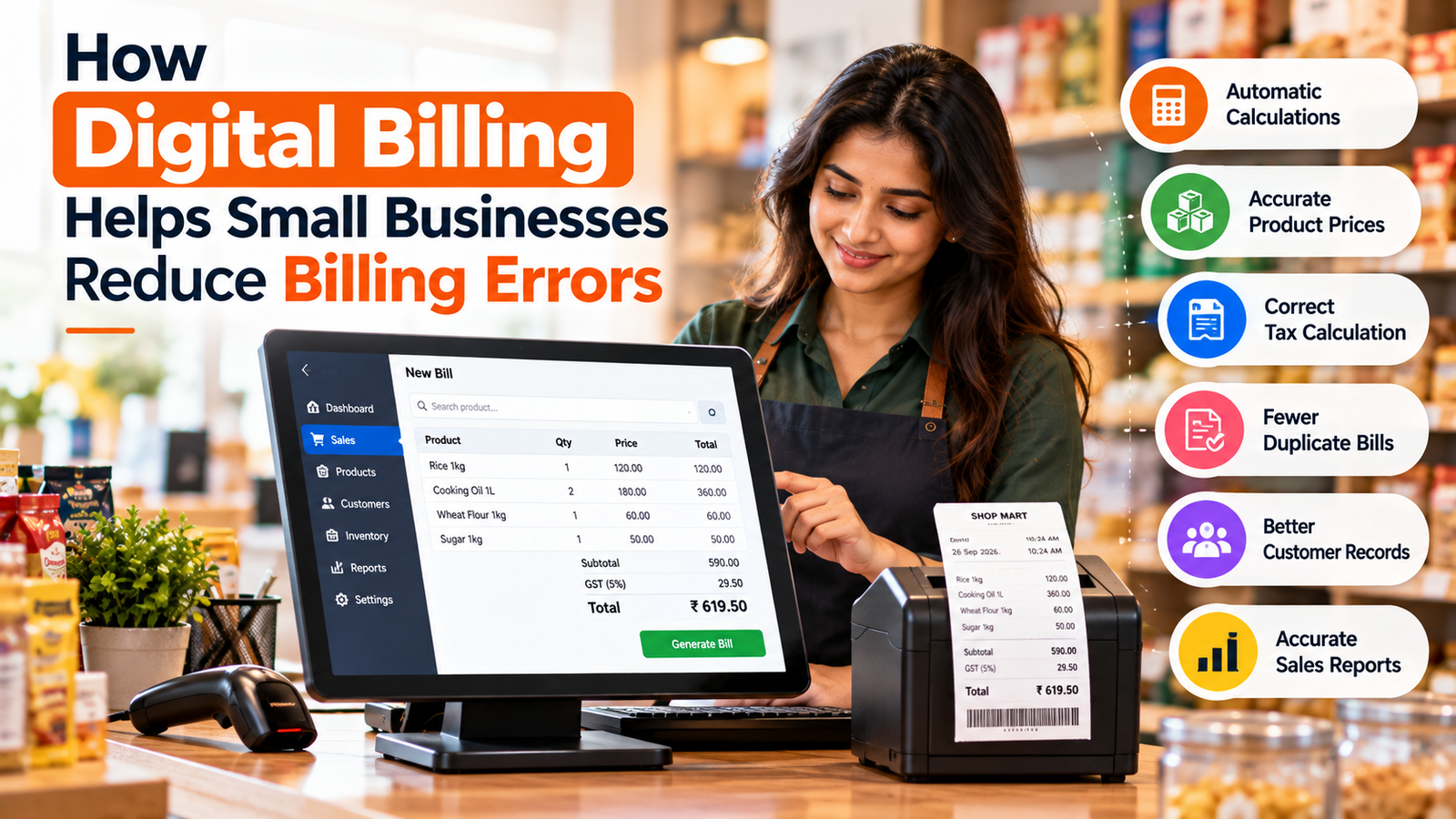
8. Billing Errors Can Reduce Revenue
Manual billing increases the possibility of mistakes involving:
-
Product prices
-
Quantities
-
Discounts
-
Taxes
-
Total amounts
Even small errors repeated across hundreds of transactions can affect revenue.
Automated calculations reduce the need for manual calculations and make billing more consistent.
Why Sales and Purchases Should Be Connected
Sales and purchases should not be treated as completely separate activities.
Consider a simple workflow:
Purchase → Inventory → Sale → Payment → Customer Balance → Reports
When these activities are connected, every transaction contributes to a more complete picture of the business.
For example, when a business purchases 100 units of a product and later sells 30 units, the system can use these transactions to help maintain the stock balance.
This creates better visibility across the entire business operation.
Manual Tracking vs Digital Tracking
| Manual Tracking | Digital Tracking |
|---|---|
| Records may be scattered | Centralized records |
| Higher chance of calculation errors | Automated calculations |
| Difficult to search old transactions | Quick transaction search |
| Stock updates may be delayed | Inventory can update with sales |
| Credit tracking can be difficult | Customer outstanding can be tracked |
| Purchase history is harder to analyze | Supplier and purchase history available |
| Reports take more time | Faster reports |
| More dependency on paperwork | Digital records |
How a Billing System Helps
A modern billing system can bring multiple business activities together in one platform.
Depending on the system, businesses can manage:
-
Sales billing
-
Purchase entries
-
Inventory
-
Customers
-
Suppliers
-
Credit sales
-
Outstanding payments
-
Discounts
-
Taxes
-
Expenses
-
Payment methods
-
Sales reports
-
Purchase reports
-
Stock reports
Instead of maintaining multiple registers or spreadsheets, business owners can access important information from a centralized system.
Better Tracking Leads to Better Business Decisions
Accurate records do more than prevent mistakes. They help business owners understand how the business is performing.
For example, sales and purchase reports can help identify:
-
Which products sell the most
-
Which products move slowly
-
Which suppliers are frequently used
-
Where purchase costs are increasing
-
How much customers owe
-
How much is payable to suppliers
-
Which periods generate higher sales
-
Where inventory is being over-purchased
These insights can help businesses plan purchases, manage inventory, and control daily operations more effectively.
The Real Cost of Poor Record Keeping
Business losses do not always come from major mistakes. Small problems can accumulate over time.
A missed sale, incorrect stock entry, forgotten credit payment, duplicate purchase, incorrect discount, or billing calculation error may seem insignificant individually.
But when these problems occur repeatedly, they can affect the overall profitability of the business.
That is why accurate sales and purchase tracking should be treated as an important part of business management rather than simply an accounting task.
Conclusion
Proper sales and purchase tracking gives businesses better visibility into their money, inventory, customers, and suppliers.
Without accurate records, businesses may face stock problems, missed payments, billing errors, unnecessary purchases, and difficulty understanding actual profitability.
A digital billing system can connect sales, purchases, inventory, payments, and reports in one place, making it easier to monitor transactions and manage day-to-day operations.
For a growing business, moving from scattered manual records to a centralized billing and management system can make financial and operational tracking much more organized.