Table of Contents
- How Centralized Records Make Business Audits and Reporting Easier
- What Are Centralized Business Records?
- Why Centralized Records Matter for Audits
- 1. Reduces the Need to Search Multiple Sources
- 2. Makes Reporting Faster
- 3. Improves Traceability
- 4. Helps Identify Changes
- 5. Reduces Duplicate Records
- 6. Makes Reconciliation Easier
- 7. Supports Better Internal Controls
- 8. Makes Audit Preparation More Organized
- 9. Helps Preserve Transaction History
- 10. Improves Management Reporting
- 11. Reduces Manual Reporting Work
- 12. Creates a Clear Digital Audit Trail
- What Should Businesses Look for in a Centralized Record System?
- Centralized Records Are More Than Just Data Storage
- Conclusion
How Centralized Records Make Business Audits and Reporting Easier
As a business grows, the amount of information it generates also increases. Sales invoices, purchase records, customer details, supplier transactions, expenses, inventory movements, employee records, payments, and approvals all contribute to the organization's operational history.
When these records are stored across spreadsheets, emails, paper documents, and different software systems, preparing reports and audits can become time-consuming. Employees may need to collect information from several sources, compare records, and manually identify discrepancies.
Centralized record management can make this process more organized. By keeping related business information within a connected system, companies can improve data accessibility, reporting, traceability, and audit preparation.
What Are Centralized Business Records?
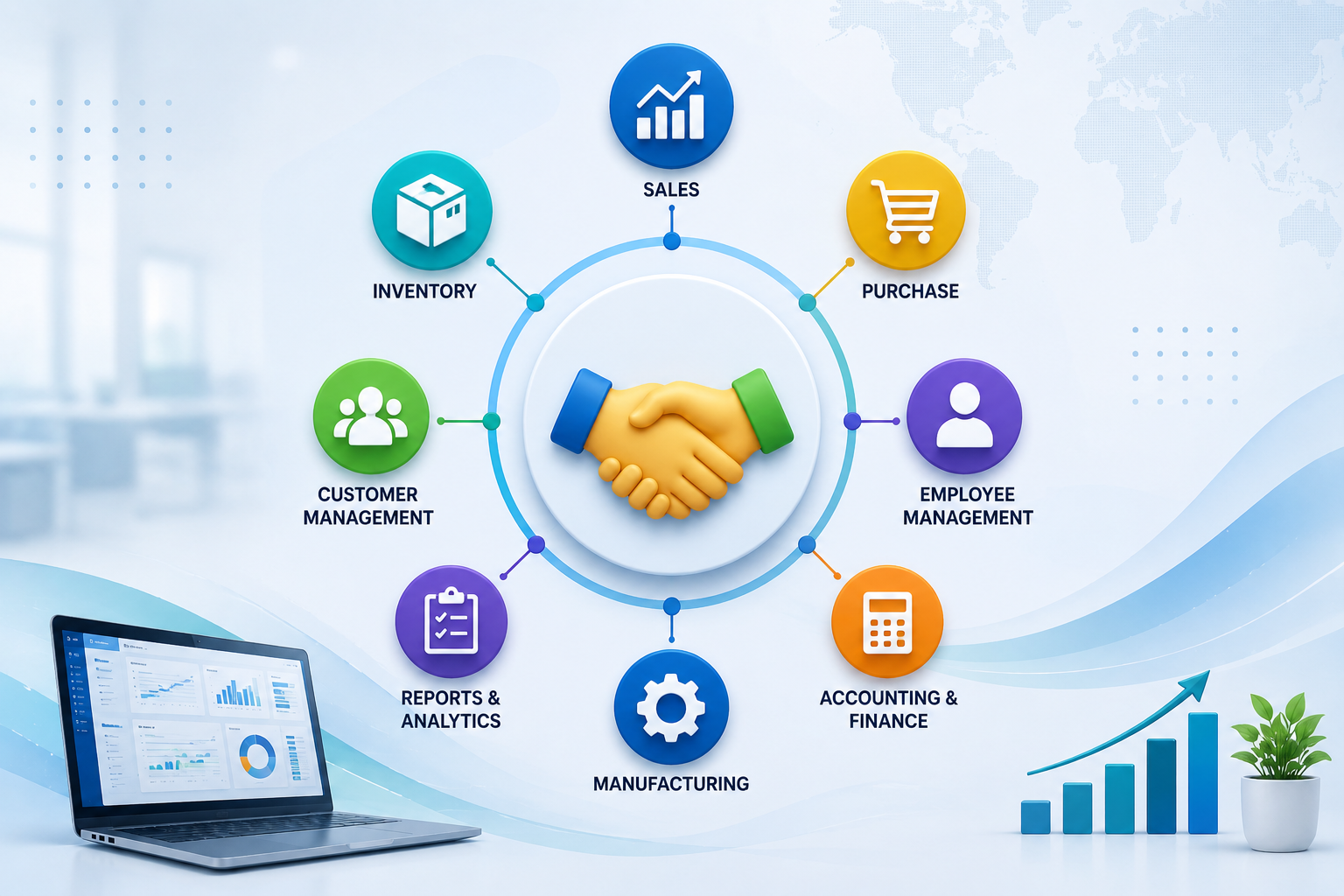
Centralized records mean that important business information is maintained within a common system or connected environment rather than being scattered across multiple independent sources.
For example, an ERP system may connect:
-
Sales
-
Purchases
-
Inventory
-
Customers
-
Suppliers
-
Accounts
-
Payments
-
Expenses
-
Employees
-
Approvals
-
Reports
When these modules share relevant information, a transaction entered in one area can be reflected in other connected areas.
For example:
Sales Invoice → Inventory Update → Payment Record → Financial Report
This creates a more connected record of business activity.
Why Centralized Records Matter for Audits
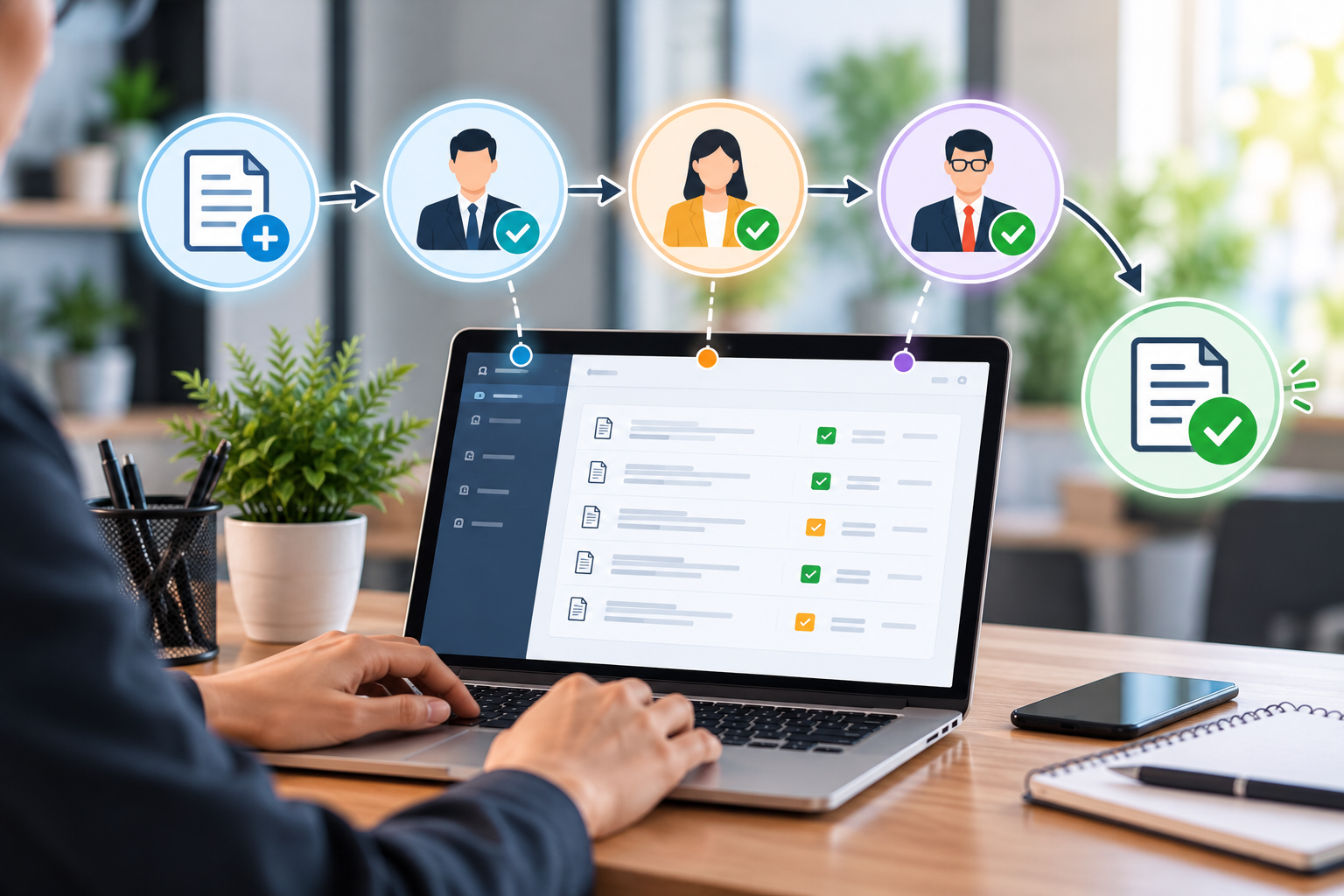
An audit often requires information to be traced back to its source. Auditors may need to understand how a transaction was created, approved, modified, recorded, and eventually reflected in a report.
Modern ERP systems can maintain audit trails that capture details such as users, dates, times, transactions, and changes. Microsoft Dynamics 365 Business Central, for example, provides audit-trail reporting that can be used to review posting activity, user IDs, dates, and transaction details.
Centralized records make it easier to organize this information and retrieve it when required.
1. Reduces the Need to Search Multiple Sources
One of the biggest challenges during an audit is locating supporting information.
Imagine an auditor asks for the complete history of a purchase transaction.
If the information is distributed across:
-
Email correspondence
-
Excel files
-
Purchase orders
-
Paper invoices
-
Payment records
-
Separate inventory software
employees may need significant time to collect and match everything.
With centralized records, related information can be connected within the same system.
For example:
Purchase Request → Purchase Order → Supplier Invoice → Payment → Stock Entry
This gives authorized users a clearer transaction history.
2. Makes Reporting Faster
Business reports require reliable information from different parts of an organization.
Management may need reports such as:
-
Sales reports
-
Purchase reports
-
Inventory reports
-
Expense reports
-
Outstanding reports
-
Payment reports
-
Customer reports
-
Supplier reports
-
Profitability reports
When the underlying records are centralized, reports can be generated from a common source instead of manually combining multiple spreadsheets.
This can reduce repetitive data collection and make regular reporting more efficient.
3. Improves Traceability
Traceability means being able to follow information from its current state back to its origin.
For example, if management sees a particular amount in a financial report, the system should ideally allow authorized users to trace it back through the relevant transaction and supporting document.
A properly designed ERP system can maintain links between transactions and their related records.
This creates a chain such as:
Report → Transaction → Invoice → Customer/Supplier → Payment
Audit-trail systems can also record who performed an action and when it occurred, helping organizations investigate changes and verify transaction history.
4. Helps Identify Changes
Business records can change over time.
For example:
-
An invoice amount may be corrected.
-
A customer address may be updated.
-
A product price may change.
-
A payment status may be modified.
-
An approval status may change.
An audit trail can record these activities so authorized users can review what changed and when.
This is particularly useful when investigating discrepancies between an earlier record and the current information.
5. Reduces Duplicate Records
When departments maintain separate spreadsheets, duplicate information can easily appear.
For example, the same supplier may be entered separately by the purchase and accounts teams.
This can create:
-
Duplicate supplier records
-
Different contact information
-
Different payment details
-
Inconsistent transaction histories
-
Conflicting reports
Centralized master records can help departments work with the same customer, supplier, product, or employee information.
6. Makes Reconciliation Easier
Reconciliation involves comparing records to confirm that they agree.
For example:
Sales Records ↔ Payment Records
or
Purchase Records ↔ Supplier Payments
or
System Stock ↔ Physical Stock
When business information is structured and connected, employees can identify differences more efficiently.
Centralized systems can also provide reports that help users focus on exceptions instead of manually comparing every record.
7. Supports Better Internal Controls
Centralized business software can also support internal controls through features such as:
-
User roles
-
Permissions
-
Approval workflows
-
Transaction limits
-
Audit logs
-
Activity history
-
Segregation of responsibilities
-
Validation rules
For example, an employee may be allowed to create a purchase request but not approve the same request.
This separation can help organizations establish clearer control over business processes.
8. Makes Audit Preparation More Organized
Preparing for an audit can involve gathering large amounts of documentation.
A centralized system can help organize information by:
-
Date
-
Department
-
User
-
Transaction type
-
Customer
-
Supplier
-
Document number
-
Approval status
-
Financial period
Instead of searching through unrelated files, authorized users can apply filters and retrieve the required records more systematically.
9. Helps Preserve Transaction History
A good business system should not only show the current status of a record. It should also provide appropriate historical information.
For example, if an invoice was originally created for ₹50,000 and later corrected to ₹48,000, the organization may need to understand why the change occurred and who made it.
Audit trails and edit logs can provide this historical context.
For accounting software used by companies in India, audit-trail requirements include recording transactions and maintaining an edit log of changes to books of account, along with the date of changes, subject to the applicable legal requirements.
10. Improves Management Reporting
Centralized records are useful not only for external audits but also for everyday management.
Management can use centralized information to understand:
-
Current sales
-
Outstanding payments
-
Inventory levels
-
Purchase activity
-
Expenses
-
Department performance
-
Customer activity
-
Operational trends
Instead of waiting until the end of a month to manually prepare information, connected systems can provide more timely access to operational data.
11. Reduces Manual Reporting Work
Manual reporting often involves exporting information from multiple systems and combining it into spreadsheets.
This process can introduce:
-
Copying errors
-
Missing records
-
Duplicate entries
-
Incorrect formulas
-
Outdated information
Centralized systems can automate portions of the reporting process by generating reports directly from stored transactions.
This can reduce repetitive work and allow employees to spend more time reviewing the information rather than preparing it.
12. Creates a Clear Digital Audit Trail
An audit trail provides a history of important activities performed within a system.
Depending on the software, it may include:
User → Action → Date → Time → Record → Change
For example:
Admin → Updated Invoice → 24 September 2026 → 11:20 AM → Invoice #1045
This information can help management and auditors understand the history of important records.
Microsoft and other ERP platforms provide audit-trail and activity-log capabilities specifically for reviewing transaction activity and changes.
What Should Businesses Look for in a Centralized Record System?
Businesses considering an ERP or business management system should evaluate features such as:
-
Centralized database
-
Role-based access
-
Audit trails
-
Activity logs
-
Approval workflows
-
Document attachments
-
Search and filtering
-
Automated reports
-
Export to Excel/PDF
-
Transaction history
-
Data validation
-
Backup and recovery
-
Integration between modules
The exact requirements will depend on the company's size, industry, processes, and regulatory obligations.
Centralized Records Are More Than Just Data Storage
Centralizing records is not simply about putting all information into one database.
The real value comes from connecting business processes and making information easier to trace.
For example:
Customer Order → Sales Invoice → Stock Movement → Payment → Financial Report
Each stage contributes to the overall business record.
When these stages are connected, employees and management can better understand how individual transactions move through the organization.
Conclusion
Centralized records can make business audits and reporting more organized by bringing important information together, improving traceability, reducing duplicate records, simplifying reconciliation, and making reports easier to generate.
A well-designed ERP or business management system can also provide audit trails, activity logs, approval records, and transaction histories that help authorized users understand who performed an action and when.
For growing businesses, centralized record management can therefore support both day-to-day operations and long-term reporting and audit requirements.
The objective is not simply to store more information. It is to create a reliable, connected record of business activity that employees, managers, accountants, and auditors can access when they need it.