Table of Contents
- The Role of APIs in Modern ERP Systems
- Introduction
- What Is an API?
- Why APIs Are Essential for Modern ERP Systems
- Key Roles of APIs in ERP Systems
- 1. Seamless Data Integration
- 2. Automating Business Processes
- 3. Real-Time Data Synchronization
- 4. Enhancing Customer Experience
- 5. Supporting Business Scalability
- 6. Improving Decision-Making
- 7. Enabling Mobile and Cloud Access
- Common ERP API Integrations
- Customer Relationship Management (CRM)
- E-commerce Platforms
- Accounting Software
- HR & Payroll Systems
- Payment Gateways
- Logistics Platforms
- Business Intelligence Tools
- Benefits of API Integration in ERP Systems
- Increased Efficiency
- Improved Accuracy
- Cost Savings
- Better Collaboration
- Faster Business Processes
- Enhanced Security
- Real-World Example
- Best Practices for ERP API Integration
- Challenges of API Integration
- Future of APIs in ERP Systems
- Conclusion
- Frequently Asked Questions (FAQs)
- 1. What is the role of APIs in ERP systems?
- 2. Why is API integration important for ERP?
- 3. Which applications can integrate with ERP using APIs?
- 4. Are APIs secure for ERP integration?
- 5. How do APIs improve business efficiency?
The Role of APIs in Modern ERP Systems
Introduction
Enterprise Resource Planning (ERP) systems have become the backbone of modern businesses by centralizing operations such as finance, inventory, sales, procurement, human resources, and customer management. However, as organizations increasingly adopt specialized software solutions, ERP systems must seamlessly communicate with other applications to ensure smooth operations.
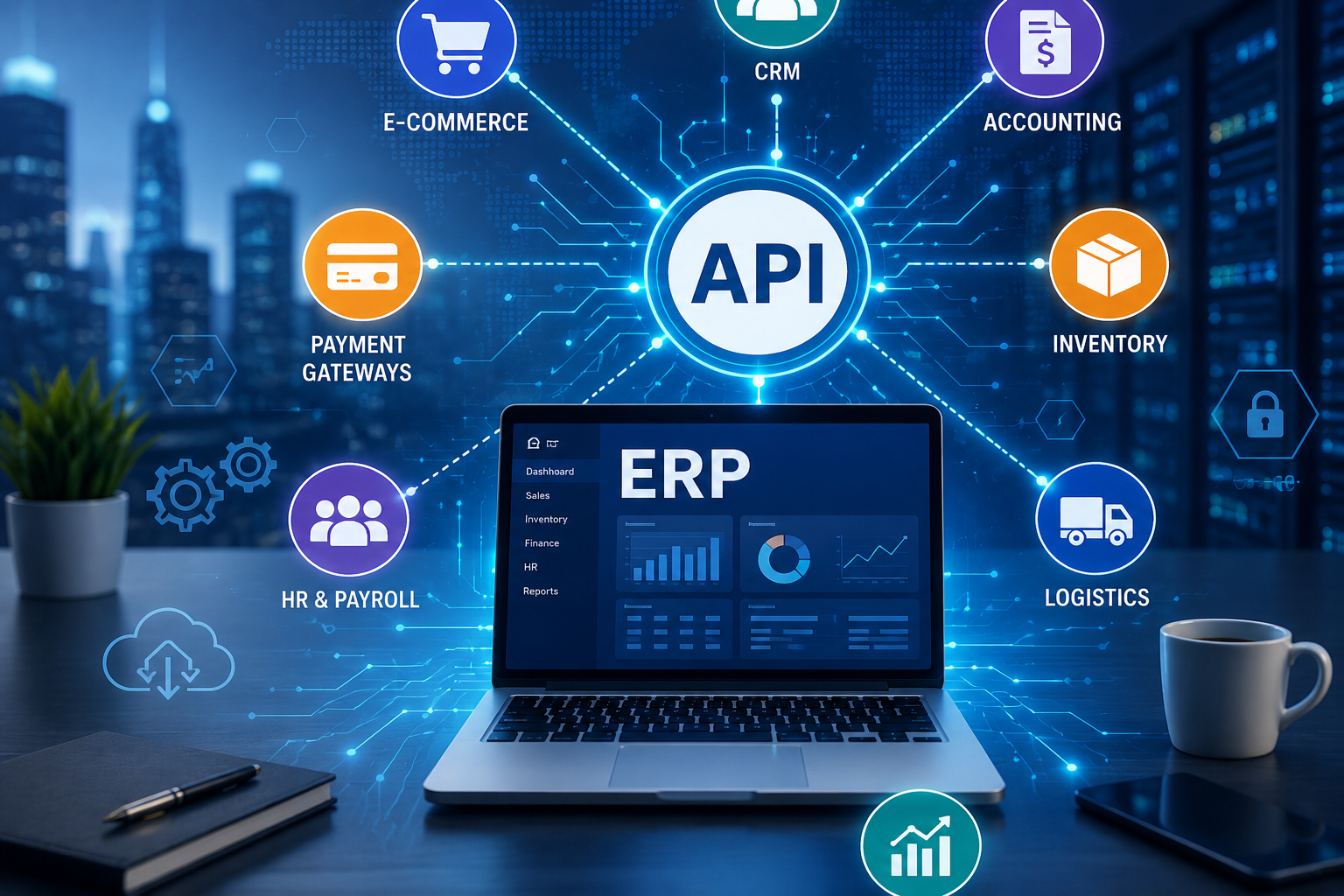
This is where Application Programming Interfaces (APIs) play a vital role. APIs enable ERP systems to connect with various business applications, automate workflows, exchange real-time data, and improve operational efficiency. Whether integrating an e-commerce platform, CRM, payment gateway, or logistics software, APIs help businesses build a connected digital ecosystem.
In this guide, we'll explore the role of APIs in modern ERP systems, their benefits, common use cases, and best practices for successful integration.
What Is an API?
An Application Programming Interface (API) is a set of rules and protocols that allows two or more software applications to communicate and exchange data securely.
Instead of manually transferring information between systems, APIs automate data sharing in real time, ensuring consistency and reducing manual effort.
For example, an ERP system can use APIs to:
-
Sync customer data from a CRM
-
Process online payments
-
Update inventory after every sale
-
Generate invoices automatically
-
Share shipment details with logistics providers
-
Connect with cloud accounting software
APIs make these interactions seamless and efficient.
Why APIs Are Essential for Modern ERP Systems
Today's businesses rely on multiple digital platforms to manage different operations. Without APIs, these systems work independently, leading to:
-
Data silos
-
Duplicate data entry
-
Delayed updates
-
Human errors
-
Reduced productivity
API integration creates a connected environment where all business applications communicate automatically, improving operational efficiency and decision-making.
Key Roles of APIs in ERP Systems
1. Seamless Data Integration
APIs enable ERP systems to exchange data with other applications in real time.
Common integrations include:
-
CRM Software
-
Accounting Systems
-
E-commerce Platforms
-
Inventory Management Software
-
HR & Payroll Systems
-
Payment Gateways
-
Shipping and Logistics Platforms
-
Business Intelligence Tools
This eliminates the need for manual data transfers and ensures all systems stay synchronized.
2. Automating Business Processes
APIs automate repetitive business tasks such as:
-
Order processing
-
Invoice generation
-
Inventory updates
-
Payment confirmations
-
Customer record synchronization
-
Employee data management
-
Email and SMS notifications
Automation reduces administrative work, minimizes errors, and increases productivity.
3. Real-Time Data Synchronization
Modern businesses require accurate, up-to-date information.
APIs ensure that changes made in one system are instantly reflected across connected platforms.
For example:
-
Inventory updates after an online purchase
-
Customer information synced across CRM and ERP
-
Financial transactions updated in accounting software
-
Employee records synchronized with HR systems
Real-time synchronization improves operational efficiency and reporting accuracy.
4. Enhancing Customer Experience
Customers expect fast, accurate, and personalized service.
API-enabled ERP systems help businesses:
-
Process orders instantly
-
Send real-time order confirmations
-
Provide shipment tracking
-
Offer accurate product availability
-
Deliver faster customer support
A connected ERP system creates a seamless customer journey.
5. Supporting Business Scalability
As businesses grow, they often adopt new software solutions.
APIs make it easy to integrate:
-
New cloud applications
-
Additional business modules
-
Third-party services
-
Mobile applications
-
AI-powered tools
This flexibility allows organizations to scale without replacing their existing ERP system.
6. Improving Decision-Making
Integrated ERP systems provide centralized, real-time business data.
Managers can monitor:
-
Sales performance
-
Inventory levels
-
Customer behavior
-
Financial reports
-
Production status
-
Employee productivity
Access to accurate data enables faster and more informed business decisions.
7. Enabling Mobile and Cloud Access
Modern ERP systems are increasingly cloud-based.
APIs allow employees to access ERP data through:
-
Mobile applications
-
Web portals
-
Cloud services
-
Remote work platforms
This improves collaboration and supports hybrid work environments.
Common ERP API Integrations
Businesses commonly integrate ERP systems with:
Customer Relationship Management (CRM)
-
Customer information
-
Sales pipeline
-
Lead management
-
Customer support
E-commerce Platforms
-
Product catalogs
-
Orders
-
Inventory
-
Pricing
-
Customer accounts
Accounting Software
-
Invoices
-
Payments
-
Tax calculations
-
Financial reports
HR & Payroll Systems
-
Employee records
-
Attendance
-
Payroll processing
-
Leave management
Payment Gateways
-
Secure online payments
-
Transaction confirmations
-
Refund processing
Logistics Platforms
-
Shipment creation
-
Tracking updates
-
Delivery confirmation
Business Intelligence Tools
-
Dashboards
-
Reports
-
Data visualization
-
Performance analytics
Benefits of API Integration in ERP Systems
Increased Efficiency
Automating workflows reduces manual effort and speeds up operations.
Improved Accuracy
Automatic data synchronization minimizes duplicate entries and human errors.
Cost Savings
Businesses reduce administrative costs by eliminating repetitive manual tasks.
Better Collaboration
Departments can access consistent and up-to-date information across all systems.
Faster Business Processes
Orders, payments, inventory updates, and reporting happen in real time.
Enhanced Security
Modern APIs support:
-
Authentication
-
Authorization
-
Data encryption
-
Secure access control
This helps protect sensitive business information.
Real-World Example
Imagine an online retail company using an ERP system.
With API integration:
-
A customer places an order on the website.
-
The ERP system automatically receives the order.
-
Inventory levels are updated instantly.
-
The payment gateway confirms payment.
-
An invoice is generated automatically.
-
The warehouse receives a packing request.
-
Shipping details are sent to the logistics provider.
-
The customer receives tracking information via email or SMS.
Without APIs, employees would need to perform these tasks manually, increasing delays and the risk of errors.
Best Practices for ERP API Integration
To maximize the benefits of API integration:
-
Choose secure and well-documented APIs.
-
Use authentication methods such as OAuth or API keys.
-
Encrypt sensitive business data.
-
Monitor API performance regularly.
-
Test integrations before deployment.
-
Maintain updated API documentation.
-
Plan for scalability as your business grows.
-
Work with experienced ERP integration professionals.
Following these best practices ensures stable, secure, and reliable integrations.
Challenges of API Integration
Although APIs offer many benefits, businesses may face challenges such as:
-
Compatibility issues between legacy and modern systems
-
Data security concerns
-
API rate limits
-
Complex integrations
-
Maintenance and version updates
-
Performance bottlenecks
Proper planning and testing help overcome these challenges.
Future of APIs in ERP Systems
The future of ERP systems is increasingly driven by APIs, cloud computing, and artificial intelligence.
Emerging trends include:
-
AI-powered automation
-
IoT device integration
-
Predictive analytics
-
Low-code and no-code integrations
-
Microservices architecture
-
Real-time business intelligence
-
Intelligent workflow automation
As digital transformation continues, APIs will remain a critical component of modern ERP ecosystems.
Conclusion
APIs play a crucial role in modern ERP systems by connecting business applications, automating workflows, and enabling seamless data exchange. They help organizations improve efficiency, reduce operational costs, enhance customer experiences, and make data-driven decisions.
Whether integrating CRM software, accounting platforms, e-commerce stores, payment gateways, or logistics providers, APIs transform ERP systems into powerful, connected business solutions. By adopting secure API integration strategies, businesses can build scalable, future-ready operations that support long-term growth and innovation.
Frequently Asked Questions (FAQs)
1. What is the role of APIs in ERP systems?
APIs connect ERP systems with other software applications, enabling real-time data sharing, workflow automation, and seamless business operations.
2. Why is API integration important for ERP?
API integration eliminates manual data entry, improves accuracy, automates processes, and helps businesses connect multiple systems efficiently.
3. Which applications can integrate with ERP using APIs?
ERP systems can integrate with CRM platforms, accounting software, HR systems, e-commerce websites, payment gateways, logistics providers, inventory management tools, and business intelligence platforms.
4. Are APIs secure for ERP integration?
Yes. Modern APIs use authentication, authorization, encryption, and secure communication protocols to protect sensitive business data when implemented correctly.
5. How do APIs improve business efficiency?
APIs automate repetitive tasks, synchronize data in real time, reduce manual errors, speed up operations, and provide businesses with accurate information for better decision-making.